Author Profile · Science Fiction
Connie Willis
b. 1945 · American
Who is Connie Willis?
A Colorado schoolteacher's daughter who has won more major fiction awards than any other science fiction writer — eleven Hugos and seven Nebulas and counting — largely by ignoring everything the genre considered fashionable and writing screwball comedy and heartbreak, frequently in the same book. Her Oxford time-travel sequence sends future historians into the Black Death, the Blitz and Victorian boating country, where the past proves to be made not of events but of missed connections, jumble sales, telephone messages that never arrive and individual, unrecorded acts of decency. Willis's great subjects are chaos theory as romantic comedy and the heroism of competent people under bombardment. Also, she is extremely funny about cathedral fund-raising committees.
Why they matter
The most decorated writer in the field's history and the modern master of time travel as humanist fiction: Doomsday Book and Blackout/All Clear are the genre's definitive statements that history's true texture is ordinary people coping.
Essential books — and where to start
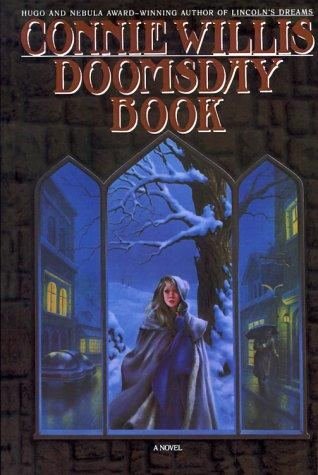
1992 · Oxford Time Travel, book 1 · Science Fiction · Time Travel, Social SF
Kivrin Engle, Oxford history undergraduate, is sent to 1320 for a fortnight's fieldwork — except a technician's fever garbles the fix, the present is locked down by an epidemic of its own, and Kivrin has arrived in 1348, the year the Black Death crosses England. While her tutor Dunworthy fights quarantine bureaucracy to retrieve her, Kivrin nurses a doomed village through its extinction, recording everything for an audience she no longer expects to see. Willis's twin epidemics — one medieval and merciless, one modern and farcical — converge on the book's unbearable centre: the bell tolled by hand, name by name.

1998 · Oxford Time Travel, book 2 · Science Fiction · Time Travel, Comic SF
Time-lagged historian Ned Henry is prescribed two weeks' bed rest and instead smuggled to 1888, partly to escape the formidable Lady Schrapnell — who is rebuilding Coventry Cathedral and requires the whereabouts of an object called the bishop's bird stump — and partly to repair an incongruity a colleague caused by rescuing a cat. What follows is Three Men in a Boat conducted under chaos theory: jumble sales, séances, misassigned fiancés and a spreading pattern of coincidence that suggests the continuum is repairing itself through Victorian courtship rituals. The most purely pleasurable book in modern SF.
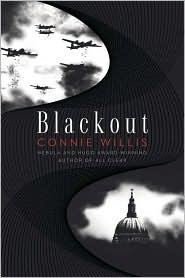
2010 · Oxford Time Travel, book 3 · Science Fiction · Time Travel, Social SF
Three Oxford historians take assignments in 1940 — evacuated children in Warwickshire, a shopgirl in the Blitz, an American correspondent at Dunkirk by accident — and then the drops stop opening. Stranded, converging on London, and increasingly terrified that their presence is altering the war's outcome, they discover the continuum's true accounting only at the end of two volumes of air raids, missed rendezvous and quiet heroism from shelter wardens, shopgirls and Shakespearean actors. Willis's twenty-year research obsession with the Blitz pays off in texture: the heroism of queueing, fire-watching and simply not leaving.
Series
1947–2006 · American
The writer who put race, gender and the body at the centre of American SF and made the field reckon with slavery as its own subject matter.
1952–2001 · British
The funniest writer the genre has produced and one of the most quoted authors in the language.
1920–1992 · American (Russian-born)
One of the Big Three of Golden Age SF.
