
Voltron / Beast King GoLion
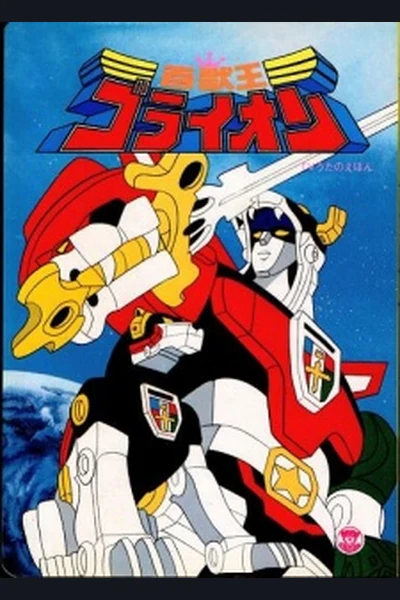
Five robot lions unite into one enormous warrior who forms a blazing sword; the Toei series that, re-edited as Voltron, became a defining slab of Western Saturday-morning television.
Overview
Voltron is the name many Western viewers know: five robot lions combining into one colossal warrior, forming a blazing sword and carving a permanent shape into Saturday-morning memory. Underneath that edited international phenomenon sits Toei Animation's Beast King GoLion, a Japanese super-robot series with a harder edge than many children who met its Americanised cousin would have suspected.
This makes the property doubly interesting. It is both a Japanese robot anime and a case study in how anime was repackaged for overseas television. Same lions, different cultural machinery. The robot combines; so do syndication strategy, censorship, localisation and toy logic.
Why it matters
Voltron was a gateway title for a generation of Western viewers who did not necessarily know they were watching reworked anime. It helped normalise Japanese visual grammar on American and international children's television: transformation sequences, team pilots, elegant enemy castles, repeated battle rituals and villains with excellent cheekbones.
GoLion, meanwhile, belongs to the long super-robot tradition of team vehicles fusing into a heroic machine. The difference between the original and its export version is part of the story. Anime history is full of such translation artefacts, where tone, violence and continuity are reshaped to fit local expectations. Sometimes the seams are visible. Sometimes the seams are the most interesting part.
What to expect
Expect bold robot adventure, a clear team structure and the ceremonial satisfaction of the lions forming Voltron. The formula is simple because it is meant to be powerful: separate heroes become one defender. The sword appears. The theme music in your head does the rest, whether invited or not.
If you watch the Japanese GoLion, expect a darker and more violent show than the familiar Western edit. If you watch Voltron, expect the smoother, more sanitised adventure version that became the cultural icon. Neither version erases the other. Together they show how a property can become two different childhoods wearing the same metal mane.
Adaptations and versions
The root work is Toei's Beast King GoLion. Voltron: Defender of the Universe re-edited and adapted Japanese footage for Western broadcast, creating the brand that later generated sequels, toys, comics and modern reboots.
For this field guide, the most useful approach is to treat GoLion and Voltron as linked but distinct. One is the original production; the other is the international phenomenon.
Where to start
Start with Voltron if you want to understand the Western pop-cultural footprint. It is the version that made the lions household names for many viewers.
Start with Beast King GoLion if your interest is anime history and the original tone. Comparing the two is especially revealing, provided one has a tolerance for repeated combination sequences. If not, giant-robot history may prove a long afternoon.
Verdict The SFcrowsnest take
Voltron / Beast King GoLion is both robot spectacle and localisation fossil. It gave the West an unforgettable combining hero while quietly demonstrating how much anime could change in transit. The lions still look splendid, of course. Some ideas need only five mechanical cats and a sword the size of municipal infrastructure.