
Voltes V
Five siblings pilot five craft that combine into one sword-swinging giant against a caste-obsessed alien empire; so beloved in the Philippines that it was reportedly banned for stirring rebellion.
Overview
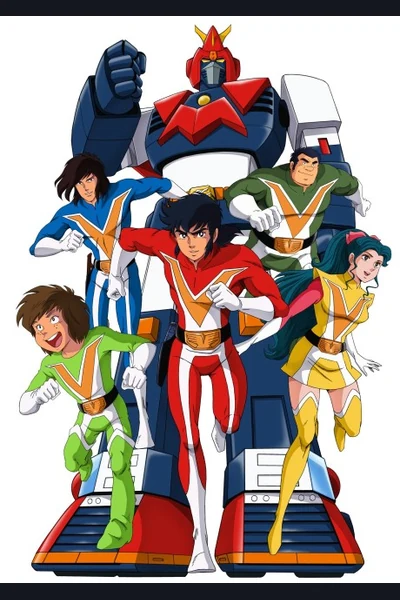
Voltes V is a 1970s combining-robot anime with a clean sales pitch and a surprisingly sharp political aftertaste. Five young pilots operate five machines that unite into the giant robot Voltes V, which then proceeds to defend Earth from the Boazanian Empire with the sort of sword-swinging certainty that made children's television much more decisive than real diplomacy.
The series forms part of Tadao Nagahama's influential super-robot work, where family melodrama, alien empire politics and mechanical spectacle are bolted together with admirable confidence. It is not merely about a robot forming up. It is about inheritance, rebellion, caste cruelty and the emotional burden of fighting an enemy who is not as simple as the toy advert might suggest.
Why it matters
Voltes V is historically important in Japan's super-robot tradition, but its cultural life in the Philippines gives it an extra charge. The series became immensely beloved there, and its reported political suppression during the Marcos era turned a children's robot show into a symbol freighted with resistance and nostalgia.
That afterlife matters. Popular culture does not remain obediently in its broadcast slot. Sometimes a cartoon robot becomes a repository for national memory, which is inconvenient for tyrants but excellent news for anyone who enjoys history having a sense of irony.
What to expect
Expect transformation stock footage, alien commanders, family secrets and a lot of earnest courage. Voltes V belongs to the age when robot anime could be square-jawed and operatic at the same time. It believes in teamwork, sacrifice and pressing the correct lever at the correct dramatic moment.
The Boazanian caste system gives the conflict more bite than a simple monster-of-the-week invasion. The story uses science-fiction hierarchy to talk about prejudice and inherited power, albeit through the broad language of 1970s adventure melodrama.
Modern viewers should expect period pacing and repetition. The emotional sincerity is part of the charm. This is not a knowing parody of super robots. It is the thing itself, eyes bright, sword ready.
Adaptations and versions
Voltes V is primarily an original anime from Toei Animation. It has inspired later revivals, adaptations and international reworkings, but the 1977 series is the foundation. Its release and reception history outside Japan, especially in the Philippines, deserves careful fact-checking before publication because the details are culturally important.
For the purposes of this guide, the core work is the original anime and its place in the larger combining-robot tradition.
Where to start
Start with the original anime if you want the historical experience. The early episodes establish the team, the robot formation and the alien threat, while later material reveals the family and political machinery beneath the surface.
If you are coming from modern mecha, approach it as a source text rather than a contemporary thriller. The gears are visible, yes, but they are the gears later shows learned to polish.
Verdict The SFcrowsnest take
Voltes V is heroic, heartfelt and historically fascinating. Its robot may combine from five craft, but the series' real power comes from the combination of spectacle and political memory. Also, any giant robot whose legacy annoys authoritarians has clearly done something right.