
Touch
Twin brothers, the girl next door, and a high-school baseball dream tinged with tragedy; Adachi's gentle, beloved masterpiece of romance and sport.
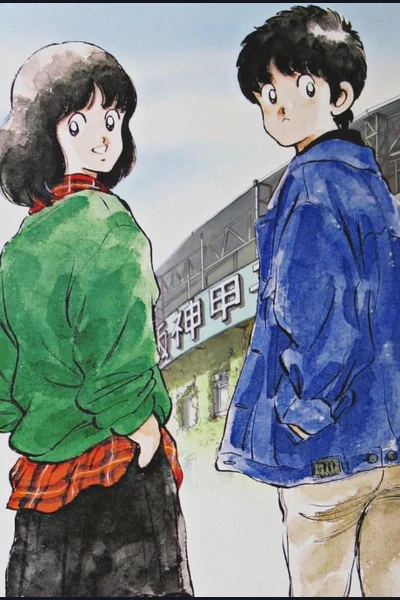
Twin brothers Tatsuya and Kazuya Uesugi grow up beside Minami Asakura, the girl next door. Kazuya is diligent, admired and the ace pitcher expected to take Meisei High School to Koshien. Tatsuya appears lazy and unserious, which is easier than admitting how carefully he has arranged his life around other people's expectations.
Mitsuru Adachi's manga ran in Shogakukan's Weekly Shonen Sunday from 1981 to 1986 and filled 26 volumes. Group TAC's television anime aired from 1985 to 1987 and became one of Japan's defining youth dramas. It contains baseball, but calling it merely a baseball series is like calling grief an interruption in the fixture list.
Overview
The emotional triangle among the twins and Minami develops through routine, jokes and things left unsaid. Baseball supplies a shared dream: reach Koshien, Japan's revered high-school tournament. Adachi is less interested in tactical explanation than in what the dream asks from each person.
His panels linger on empty rooms, weather and pauses after conversation. Major events may occur without the visual shouting expected from weekly manga. The title's “touch” suggests contact, timing and the small gestures through which affection becomes visible.
Why it matters
Touch became a cultural phenomenon because it joined romance, sport and tragedy without allowing one to become decorative support for another. Its characters behave like teenagers who cannot yet name their own sacrifices.
Adachi's apparent simplicity is exacting craft. Similar-looking faces and quiet layouts make the reader attend to context rather than costume. The result influenced decades of school romance and sports manga while remaining difficult to imitate without producing merely less eventful pages.
What to expect
Expect slow-burn romance, family affection, baseball and a major tragedy widely known in Japan but better encountered unspoiled. Violence is minimal. Emotional consequences are not.
The pace is measured, particularly in the 101-episode anime. Viewers raised on rapid cuts may need several episodes before noticing the series has already told them a great deal.
Adaptations and versions
The anime closely follows the manga and adds time with the cast. Compilation and sequel television films continue or revisit the story with varying importance. Live-action adaptations also exist.
Adachi's later manga Mix returns to Meisei High decades afterwards with a new generation. It is related legacy, not required before Touch.
Where to start
Read manga volume one for Adachi's control of silence, or begin the television anime and let its rhythm settle. Avoid plot summaries. This is a story whose most famous turn should still be allowed to arrive in its own shoes.
Verdict The SFcrowsnest take
Touch understands that adolescence is built from jokes, promises and events nobody is ready to survive. Baseball gives the characters a destination; love and loss determine who can reach it.
A quiet masterpiece of sports romance, and proof that the most devastating panel need not raise its voice.