
Inuyasha
A modern schoolgirl falls down a well into feudal Japan and straight into a love triangle with a half-demon; 2000s comfort fantasy at its most rewatchable.
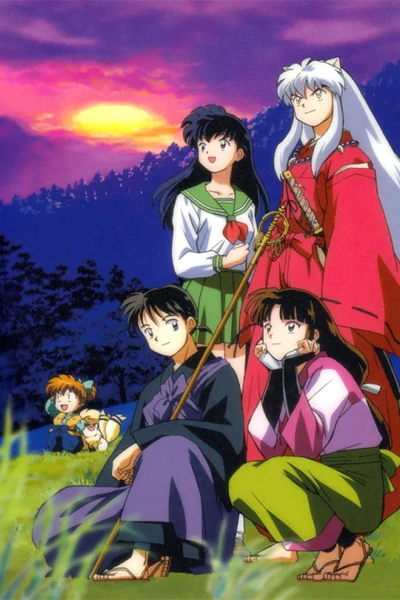
Kagome Higurashi falls down the old well at her family shrine and lands in a demon-filled version of Japan's Sengoku period. There she meets Inuyasha, a half-demon pinned to a tree by a sacred arrow. Kagome releases him, accidentally shatters the powerful Shikon Jewel and must help collect its fragments. School attendance becomes difficult to defend on the form.
Rumiko Takahashi's manga ran in Shogakukan's Weekly Shonen Sunday from 1996 to 2008 and filled 56 volumes. Sunrise's television anime began in 2000, paused before the manga ended, then returned as Inuyasha: The Final Act to complete the central story. The sequel anime Yashahime: Princess Half-Demon follows the next generation.
Overview
Kagome and Inuyasha travel with monk Miroku, demon slayer Sango, fox child Shippo and fire-cat Kirara. Their enemy Naraku collects jewel shards while manipulating personal grief with the dedication of a man who has mistaken emotional sabotage for a pension scheme.
The romance centres upon Kagome, Inuyasha and priestess Kikyo, Kagome's previous incarnation. It is less a conventional triangle than a dispute among love, guilt and reincarnation, none of which communicate with ideal efficiency.
Why it matters
Takahashi combines monster-of-the-week adventure, long romance and Japanese folklore with her reliable comic timing. Yokai range from tragic to disgusting, and battles often grow from human resentment rather than abstract evil.
Kagome remains a modern girl rather than dissolving into the period setting. She travels between eras, worries about exams and refuses Inuyasha's attempts to control her. Their quarrels are repetitive but central to the slow development of trust.
What to expect
Expect sword action, demons, body horror, romantic jealousy and extended pursuit of jewel fragments. Violence is moderate to strong, with deaths and disturbing monsters, but the tone remains accessible to teenagers. Comedy and found-family warmth are frequent.
The anime contains filler and repeated confrontations, while the manga also extends its central chase. Naraku has the survival instincts of a contractual renewal clause.
Adaptations and versions
The manga is complete. For anime, watch the original Inuyasha series, then The Final Act. Four theatrical films are optional side adventures placed during the original run.
Yashahime is an anime-original sequel focused on the daughters of the earlier cast. Watch it afterwards; its premise relies upon knowledge of relationships the original spent a considerable time refusing to settle.
Where to start
Anime episode one is an inviting entrance and captures the mixture of folklore, comedy and danger. Manga volume one moves faster. Use a filler guide if momentum matters, but some anime-original material provides pleasant time with the travelling group.
Verdict The SFcrowsnest take
Inuyasha is comfort fantasy built from sharp edges: demons, betrayal and an exceptionally protracted romance softened by the pleasure of a good travelling party. Takahashi's characters quarrel because affection has made retreat difficult.
The chase is too long and Naraku escapes too often, but the world remains welcoming. Recommended for viewers wanting folklore adventure, yearning and a heroine who can travel five centuries yet still be late for school.