
The Tale of the Princess Kaguya
A ravishing charcoal-and-watercolour retelling of Japan's oldest story; Takahata's luminous swan song (he died in 2018).
Overview
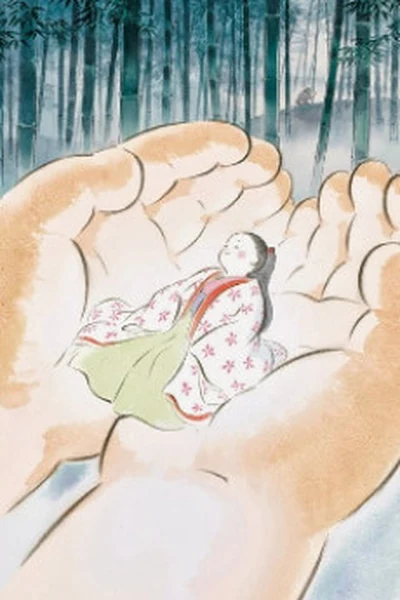
The Tale of the Princess Kaguya is Isao Takahata's final feature and one of Studio Ghibli's most visually daring films. Adapted from The Tale of the Bamboo Cutter, it begins when a bamboo cutter discovers a tiny princess inside a glowing stalk. She grows with impossible speed, is taken into aristocratic life and learns that being treated as a treasure can feel very much like being stored.
The film's brush-like animation looks as though it might vanish if you breathe too hard. That delicacy makes the emotional force more devastating. Kaguya's life is drawn like a poem and structured like a trap.
Why it matters
It matters because it is Takahata's great late masterpiece, a film that uses apparent simplicity to ask fierce questions about class, gender, ownership and the way adults impose destiny on children while calling it love.
The visual style is not decorative novelty. It makes the film feel immediate, unfinished, alive. When Kaguya runs, the line itself seems to break from courtly restraint. Few animated films have made freedom look so much like the drawing trying to escape the paper.
What to expect
Expect a slow, beautiful, heartbreaking folk tale. There is humour and tenderness, but the story's shape is tragic. The courtship sequences carry satire; the family material carries pain; the ending arrives with the calm cruelty of myth.
Content includes emotional coercion, loss, confinement, forced social roles and grief. It is suitable for thoughtful viewers, but not a light fairy story.
Adaptations and versions
The Tale of the Princess Kaguya is a Studio Ghibli theatrical film directed by Isao Takahata, adapted from the classic Japanese folktale The Tale of the Bamboo Cutter.
It stands alone and is best treated as a major work of animated cinema, not merely a Ghibli completist entry.
Where to start
Do not start here if you need fast plotting. Start here if you want to understand Takahata's artistic ambition at its height.
It pairs well with Only Yesterday and Grave of the Fireflies as evidence that Takahata's range was both gentle and merciless.
Verdict The SFcrowsnest take
The Tale of the Princess Kaguya is exquisite, painful and formally astonishing. It turns an old tale into a living line, then lets that line tremble under the weight of everything adults call love.