
Studio Ghibli (Spirited Away, Totoro, etc.)
The studio that makes children weep happy tears and adults reassess their entire life choices; if anime has a Sunday best, this is it, hand-drawn and unhurried.
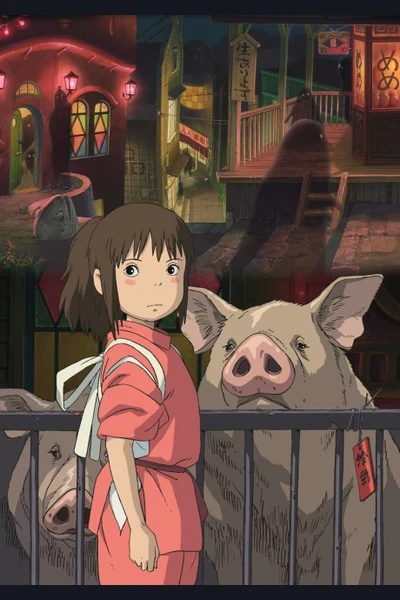
Studio Ghibli is regularly described as the Japanese Disney, which is convenient, flattering and not especially useful. Disney did not make Grave of the Fireflies. Ghibli did not build its identity around princess branding, although it has several princesses and would probably insist that they finish repairing the irrigation system before attending the ball.
Founded in 1985 by directors Hayao Miyazaki and Isao Takahata with producer Toshio Suzuki, the studio grew from the success of Miyazaki's Nausicaä of the Valley of the Wind. Its catalogue includes fantasy adventures, domestic dramas, wartime tragedy, ecological fables and one determined account of a family behaving badly in watercolour.
Overview
Miyazaki's films supply much of the internationally recognised image: flight, forests, young heroines, ambiguous magic, elaborate machines and food animated with more care than many live-action actors receive. My Neighbour Totoro, Kiki's Delivery Service, Princess Mononoke, Spirited Away and Howl's Moving Castle show his range from childhood observation to historical violence.
Takahata offers a different sensibility. Grave of the Fireflies, Only Yesterday, Pom Poko, My Neighbours the Yamadas and The Tale of the Princess Kaguya experiment with form while examining memory, society and human self-deception. Yoshifumi Kondo, Hiroyuki Morita, Hiromasa Yonebayashi and Goro Miyazaki add further voices. Ghibli is a studio, not one man's decorative surname.
Why it matters
The films trust animation with ordinary life. A child waits at a bus stop. A family moves house. Somebody cooks breakfast or cleans a room. These pauses are not delays between plot points but evidence that worlds continue when no villain is speaking.
Nature is neither sentimental wallpaper nor a simple moral reward. Forests can comfort, threaten or remain indifferent. Technology can liberate or destroy; Miyazaki loves aircraft while remaining appalled by war. That contradiction gives the machines their ache.
Ghibli also helped establish animation internationally as cinema rather than children's product. Spirited Away won the Academy Award for Best Animated Feature; other films crossed art-house, family and mainstream audiences without filing away their Japanese settings for export.
What to expect
Do not assume every Ghibli film suits every child. Totoro, Ponyo and Kiki are gentle, though each contains anxiety. Princess Mononoke is bloody. Grave of the Fireflies is devastating. The Wind Rises concerns compromised beauty and war. Check individual classifications rather than trusting the smiling forest creature on the studio logo.
English dubs are often strong and useful for families; subtitles preserve the Japanese performances. Neither choice is a moral examination. Availability and dub casts vary by territory and edition.
Adaptations and versions
Nausicaä predates the studio but belongs to its practical and creative lineage. The principal catalogue is theatrical, with occasional television work and international co-productions such as The Red Turtle. Restoration has generally served the films well, but older edited English versions—most notoriously the shortened release of Nausicaä—should be avoided.
The studio's first fully computer-animated feature, Earwig and the Witch, demonstrated that a change of tool does not automatically reproduce a house style formed through decades of drawing. Ghibli's identity is not “hand-made prettiness”; it is observation, direction and the moral intelligence behind the image.
Where to start
For children, try My Neighbour Totoro or Kiki's Delivery Service. For fantasy spectacle, choose Spirited Away or Princess Mononoke. For adult drama, Only Yesterday or The Wind Rises. For emotional demolition, Grave of the Fireflies, but not on an evening requiring productivity afterwards.
There is no continuity order. Follow mood, director or period. The individual film pages in this guide provide more specific cautions and entry points.
Verdict The SFcrowsnest take
Studio Ghibli's reputation rests not on a single visual formula but on attention: to weather, labour, childhood, appetite, grief and the way moral choices enter ordinary rooms. Even lesser films are usually interesting about what the studio attempted.
The catalogue belongs in any serious animation guide. Approach it as a body of filmmakers, not a shelf of interchangeable whimsy. The haunted kettle may remain in the cupboard. Ghibli has already animated the steam, the person making tea and the memory that returns when the cup touches the table.