That Time I Got Reincarnated as a Slime
A murdered salaryman is reborn as a feeble slime and proceeds to build a thriving monster nation from scratch; the cosy, nation-building face of the isekai boom.
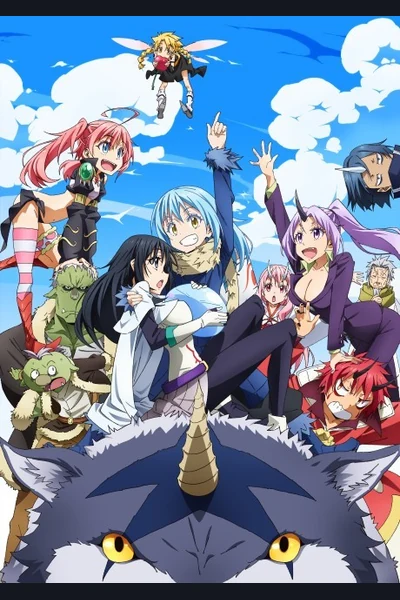
Murdered office worker Satoru Mikami awakens in another world as a small blue slime. This appears a poor result from the reincarnation lottery until he discovers an ability to absorb creatures, copy powers and receive strategic advice from a voice inside his head. Within a remarkably short time the weakest monster in the rulebook has entered senior management.
Overview
Fuse's That Time I Got Reincarnated as a Slime—frequently shortened to Tensura—grew from web novel to light novels, manga and anime. Its hero adopts the name Rimuru Tempest and begins gathering goblins, wolves, ogres and other beings usually left on the wrong end of an adventurer's experience-point calculation.
The distinctive turn is from personal power fantasy to civic construction. Rimuru builds roads, trade, laws, alliances and eventually a nation where monsters can live without serving as disposable targets. There are still battles, but the fantasy of competent, benevolent administration is at least as important as the spectacular attacks. Several viewers may find the committee meetings strangely soothing; local councils should study this with caution.
Why it matters
The series helped define the warmer, institution-building branch of modern isekai. Rimuru's strength is overwhelming, yet the real appeal lies in watching isolated communities gain names, homes and a shared project. Hospitality becomes policy.
That optimism is not politically frictionless. A powerful ruler making kind decisions remains a powerful ruler, and the story often resolves structural problems through Rimuru's exceptional competence. Still, its interest in diplomacy, logistics and coexistence gives the usual levelling machinery a sociable purpose.
What to expect
Expect a relaxed mixture of fantasy combat, jokes, evolving powers and surprisingly long conversations about treaties. The tone is genial until threats to Rimuru's community make it abruptly severe. Mass violence, warfare and death eventually sit beside the colourful monsters and communal feasts.
The large cast expands quickly, while ranks, skills and titles breed like enchanted paperwork. Viewers who enjoy systems will have a fine time. Those allergic to meetings may discover that nation-building contains fewer sword fights per minute than the opening suggests.
Adaptations and versions
The light novels form the principal published source, expanding the earlier web version. Taiki Kawakami's manga is a major adaptation rather than the origin, and Eight Bit's television anime follows the same broad route with its own pacing. Spin-offs explore side characters and the calmer daily life of the settlement.
Because the versions progress at different speeds, matching an anime stopping point to a book requires checking by story arc rather than trusting equal volume numbers.
Where to start
The anime provides the easiest introduction to Rimuru's world and its growing population. Choose the manga for a steadier reading pace, or the light novels if internal reasoning, politics and the fullest detail are the principal attraction.
Verdict The SFcrowsnest take
This is comfort-viewing imperial administration with a blob at the centre. Slime can be indulgent, overpowered and desperately fond of another conference, but its wish is fundamentally generous: that strangers might become neighbours if someone builds the kitchens first. There are less appealing fantasies to dominate the market.