
Rurouni Kenshin (Samurai X)
A wandering ex-assassin with a reversed-edge sword vows never to kill again; Meiji-era swordplay with real heart, and a recent remake that's frankly gorgeous.
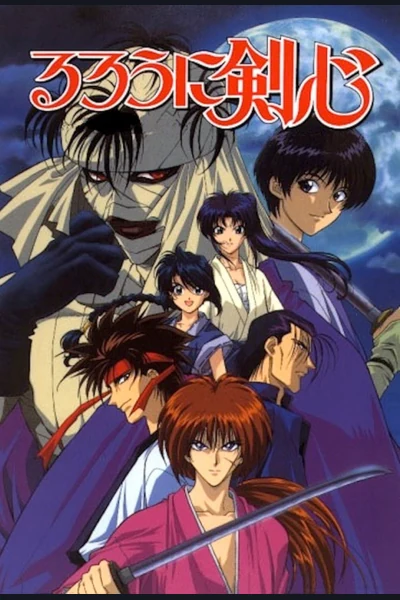
Ten years after serving as the assassin Hitokiri Battosai during the violent birth of the Meiji government, Kenshin Himura wanders Japan carrying a reverse-blade sword and a vow never to kill again. The blade can disable opponents without cutting them, provided one accepts the generous medical assumptions of action manga.
Nobuhiro Watsuki's manga ran in Shueisha's Weekly Shonen Jump from 1994 to 1999 and filled 28 volumes. A television anime began in 1996; a new adaptation launched in 2023. OVAs and five live-action films offer further versions of Kenshin's past and attempted atonement.
Overview
Kenshin settles at Kaoru Kamiya's dojo and forms a household with fighter Sanosuke Sagara and orphan Yahiko Myojin. His peace is repeatedly challenged by enemies born from the same revolution: former officials, discarded warriors and survivors who disagree about what the new Japan owes the dead.
The Kyoto arc centres upon Makoto Shishio, another government assassin whom the new regime attempted to erase. Kenshin's vow is therefore tested not by abstract evil but by the political machinery that made both men useful.
Why it matters
The story's central question is stronger than its historical romance: can somebody responsible for killing live usefully without treating self-punishment as restitution? Kenshin cannot undo his work. He can choose what his skill protects now.
The Meiji setting captures a country between sword and modern state. Real figures and events mingle with heightened martial arts. The manga is not a textbook, but its conflicts grow from modernisation, class loss and government secrecy rather than a decorative samurai backdrop.
The property also carries an unavoidable ethical issue. Watsuki was convicted and fined in Japan for possession of child pornography. Publication of the later Hokkaido Arc resumed after suspension. Readers may reasonably decide that this affects whether or how they support new editions. A guide should state the fact, not hide it behind the work's popularity.
What to expect
Expect sword violence, killings in flashback, political conspiracy and comedy that can clash with the drama. The original series becomes darker in Kyoto. Romance between Kenshin and Kaoru is gradual and restrained.
Adaptations and versions
The 1996 anime adapts the early and Kyoto material well, then moves into extensive anime-original stories. The OVA Trust & Betrayal presents Kenshin's assassin years with grave, beautiful direction; Reflection offers a controversial alternate conclusion.
The live-action films are unusually successful manga adaptations, compressing the story with superb physical sword choreography. The 2023 anime restarts from the manga with modern production and less filler.
Where to start
Read manga volume one or watch the remake. Try Trust & Betrayal after understanding Kenshin's present vow, even though it is chronologically earlier. The live-action series is an excellent parallel route.
Verdict The SFcrowsnest take
Rurouni Kenshin contains a serious story about violence, state power and atonement, supported by memorable sword drama. Its creator's conviction cannot be edited from the page's context and should inform any recommendation.
The work remains historically influential; the reader remains entitled to decide whether admiration, access and financial support belong in the same sheath.