
Pom Poko
Shape-shifting tanuki (and their, ahem, formidable anatomy) wage war on suburban development; a daft, sad and very strange eco-fable.
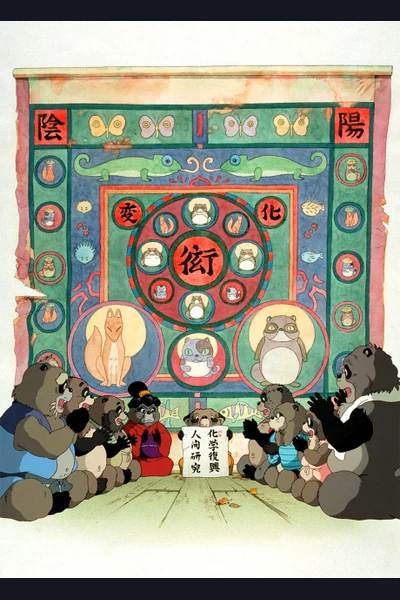
Overview
Pom Poko is Isao Takahata's eco-fable about shape-shifting tanuki fighting the spread of suburban development across their habitat. It is funny, mournful, folkloric and, for viewers unfamiliar with tanuki tradition, likely to produce a sudden startled silence around the subject of magical anatomy.
The tanuki use illusion, transformation, sabotage and cultural memory to resist the humans remaking their landscape. The film is daft in the way folklore is often daft, but its grief is entirely serious. The forest is not losing an argument. It is being paved.
Why it matters
Pom Poko matters because it gives Ghibli's environmental concerns their strangest and most communal expression. Where Miyazaki often centres a young protagonist, Takahata watches a whole society try to survive modernity. The tanuki are comic, lazy, brave, foolish and divided, which is to say, distressingly recognisable.
The film also preserves folklore as living political material. Shape-shifting is not just magical business; it becomes a doomed form of resistance against economics, planning and human amnesia.
What to expect
Expect comedy, documentary-like narration, transformation parades, environmental sadness and tanuki body humour that some Western releases have had to tiptoe around. The tone swings from slapstick to elegy without much warning.
The film can feel sprawling, but that sprawl is part of its collective structure. It is about a community, not one chosen hero. The result is messy and powerful, like a protest march organised by trickster animals with questionable meeting discipline.
Adaptations and versions
Pom Poko is an original Studio Ghibli theatrical feature directed by Isao Takahata, drawing on Japanese tanuki folklore. International translations may handle folklore-specific details differently, so publication notes should be checked for terminology and edition.
It stands alone, though a little context on tanuki traditions helps.
Where to start
This is not the cleanest first Ghibli film, but it is essential for understanding Takahata's range and the studio's ecological imagination.
Watch it when you are ready for something funny, strange and ultimately sadder than its bouncing surface suggests.
Verdict The SFcrowsnest take
Pom Poko is one of Ghibli's oddest treasures: comic, earthy, political and quietly devastating. It turns folklore into environmental resistance, then asks whether enchantment can survive a housing development. The answer is not comforting, but it is memorable.