
Planetes
The unglamorous lives of orbital binmen clearing space debris in 2075; hard, humane, grown-up SF about the working stiffs of the spacefaring age. A quiet classic.
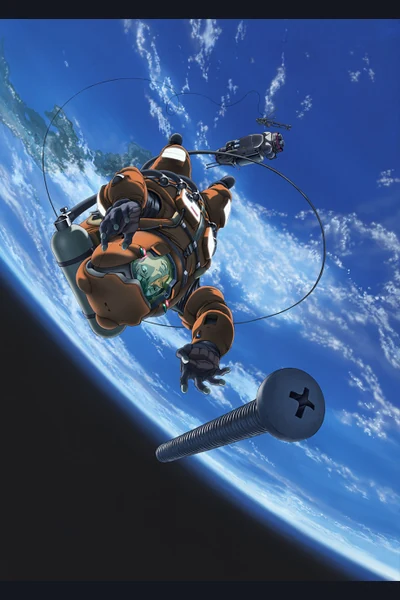
By 2075, humanity works in orbit and has produced the inevitable by-product of progress: rubbish moving at several kilometres per second. The debris collectors of Technora Corporation remove obsolete satellites, lost screws and other objects capable of turning a spacecraft into modern art. Their department is underfunded because some things transcend gravity.
Overview
Makoto Yukimura's Planetes follows Hachirota “Hachimaki” Hoshino, a debris worker who dreams of owning a spaceship, and Ai Tanabe, an earnest newcomer convinced that love is the proper answer to most human problems. Their colleagues know that oxygen, budget approval and functioning grapples should also be kept available.
The setting treats spaceflight as employment rather than destiny. Astronauts fill forms, resent managers, worry about contracts and bring private disappointments into dangerous machinery. Orbital mechanics impose limits no speech can negotiate away.
Why it matters
This is hard science fiction with calluses. Its attention to inertia, radiation, isolation and orbital debris creates credibility, but the physics matters because people must live inside it. Expansion into space reproduces inequality: wealthy nations and corporations reap benefits while poorer countries provide resources and watch from below.
The title comes from a Greek word for wanderers. Hachimaki's ambition gradually becomes a question about what must be discarded in order to travel—and whether a dream that excludes everyone else is freedom or another vacuum.
What to expect
Expect workplace comedy, extravehicular peril, romance, political tension and reflective stretches in which characters confront the size of space without instantly firing at it. Terrorism and major accidents eventually darken the story. The technical detail is persuasive, though still dramatised fiction rather than an astronaut-training elective.
The cast can be abrasive, particularly Hachimaki. That is part of the design: these are working adults with ambitions, prejudices and access to equipment more reliable than their emotional judgement.
Adaptations and versions
Yukimura's manga is a compact, complete work. The Sunrise television anime expands it substantially, adding colleagues, corporate politics and original episodes while rearranging character development. Both reach related thematic territory by meaningfully different routes.
The anime's broader workplace ensemble makes the world feel busier; the manga is more intimate and philosophical. Neither is a shortened copy of the other, and comparing them is unusually rewarding.
Where to start
Begin with the anime if a detailed near-future workplace appeals, or the manga if you prefer Yukimura's concentrated character study. No wider franchise knowledge is involved. Four print volumes are considerably less intimidating than the word “hard SF” sometimes pretends.
Verdict The SFcrowsnest take
Planetes remembers that the first people living in space will still have supervisors, debts and somebody else's sandwich in the communal refrigerator. Humane, rigorous and quietly ambitious, it turns orbital refuse into a story about everything civilisation tries to leave behind. A classic, with all bolts securely fastened.