One-Punch Man
A superhero so powerful he wins every fight with a single punch, and is profoundly bored about it; a parody that became the very thing it was mocking.
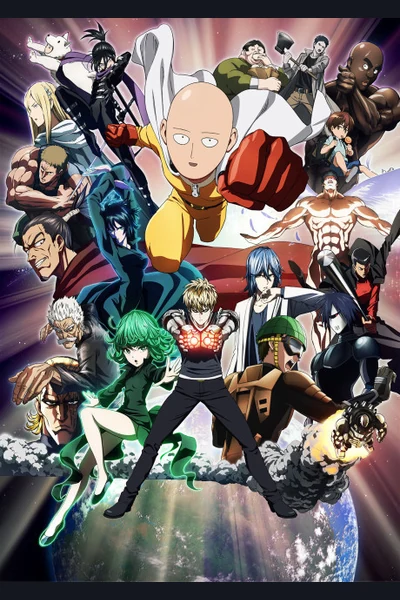
Saitama trained so hard that he became bald and can defeat any opponent with one punch. This sounds like the final reward in a battle manga. It proves to be an existential administrative error. Monsters explode before he becomes interested, nobody recognises him and supermarket discount day offers more suspense than saving the city.
ONE began One-Punch Man as a webcomic in 2009. Yusuke Murata later redrew and expanded it as a digital manga published by Shueisha, bringing virtuoso draftsmanship to characters whose original charm partly depended upon looking as though they had escaped from a notebook. Madhouse produced the first anime series; J.C.Staff handled later television production.
Overview
Saitama joins the Hero Association with Genos, a spectacularly earnest cyborg who assumes every casual remark from his teacher contains martial wisdom. The Association ranks heroes through tests, publicity and bureaucracy, producing a system where genuine ability can be overlooked while marketable incompetence receives a better position.
The supporting cast includes martial artists, psychics, criminals, idealists and professional heroes who have built identities around strength. Saitama's impossible power turns their conventional struggles into the real drama. He may finish the enemy, but others must decide why they stand up before he arrives.
Why it matters
The central joke dismantles escalation. If the hero has already reached the top, a stronger villain cannot provide growth. ONE instead examines boredom, recognition and purpose. Saitama wanted power, achieved it and discovered that fulfilment was not included in the package.
The series also satirises rankings and fandom. Heroism becomes quantified by popularity, test scores and media narrative. Saitama's blank face resists the surrounding demand for impressive presentation, while Murata renders every other muscle and explosion with almost indecent splendour.
Parody gradually becomes the genre it mocks. Long battles, power systems and earnest rivals accumulate around the anti-climax. This is partly the point and partly a genuine tension: readers may find themselves waiting through a magnificent conventional fight for Saitama to end it in one panel.
What to expect
Expect huge action, monster gore, deadpan comedy and extended supporting-character battles. Violence is fantastical but can be graphic. Romance is almost absent. Friendship arrives through Genos's devotion, King's anxiety and Saitama's accidental community.
The first anime series is celebrated for fluid animation and a remarkable concentration of talent. Later production looks more conventional and attracted criticism in comparison. That does not erase the performances or underlying story, but the change is visible when the opening set the bar somewhere above low orbit.
Adaptations and versions
ONE's webcomic is the raw original and proceeds according to its own schedule and choices. Murata's manga expands events, adds characters and periodically revises chapters, making it more than a decorative redraw. The anime chiefly follows the manga version.
Begin with the manga or first anime series. The webcomic is best explored afterwards for its different timing and direct contact with ONE's ideas. Check current season status before publication; superhero scheduling has become another opponent nobody can punch.
Where to start
Anime episode one states the joke perfectly and remains the easiest entrance. Manga volume one offers Murata's page design and continues beyond animated material. If the anti-climax seems too simple, keep going: the story is less about whether Saitama wins than whether winning can make him feel alive.
Verdict The SFcrowsnest take
One-Punch Man is a superb joke that discovered enough sadness to become a story. Saitama's strength makes him ridiculous; his loneliness makes him human. Around him, weaker heroes demonstrate that courage only exists where defeat remains possible.
The manga is visually astonishing, the first anime outstanding and the franchise's own escalation occasionally at odds with its premise. Recommended for superhero enthusiasts who suspect rankings are nonsense and final forms may not solve the important problem.