
KochiKame: Tokyo Beat Cops
Four decades of a wildly entrepreneurial Tokyo beat cop forever chasing get-rich-quick schemes; a 201-volume comedy institution barely known in the West, beloved in Japan.
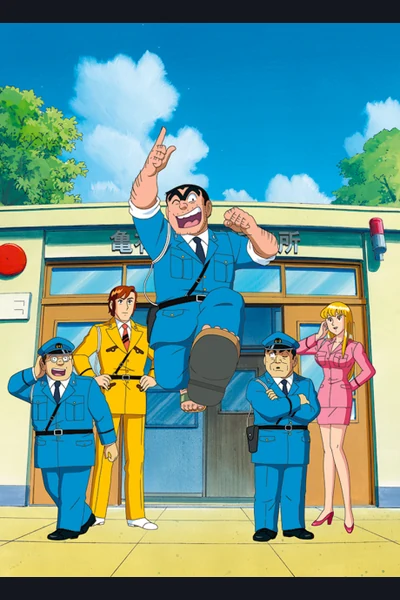
Kankichi Ryotsu is a police officer stationed at a small box near Kameari Park in Tokyo. He is strong, knowledgeable and catastrophically entrepreneurial. A new hobby, gadget or business opportunity appears; Ryotsu sees wealth; public order takes shelter behind the desk.
Osamu Akimoto's manga began in Shueisha's Weekly Shonen Jump in 1976 and ran continuously until 2016, reaching 200 collected volumes before later material produced a 201st. Studio Gallop's television anime aired from 1996 to 2004 with specials continuing afterwards. In Japan it is an institution; in English it is barely a visiting lecturer.
Overview
Ryotsu works under long-suffering chief Daijiro Ohara alongside handsome officer Keiichi Nakagawa and wealthy Reiko Akimoto. Schemes escalate from local inconvenience to machinery, property and international embarrassment, then reset with the police box still standing through contractual miracle.
The series ranges across toys, vehicles, computers, food, sport and urban life. Akimoto's enthusiasm for objects gives the jokes documentary value: four decades of consumer technology pass through Ryotsu's acquisitive hands.
Why it matters
KochiKame is a social history disguised as a gag manga. Tokyo changes, old neighbourhoods disappear and new fashions arrive to be monetised badly. Ryotsu's greed makes him a comic engine, but his local knowledge and occasional generosity keep him from becoming merely exhausting.
Its longevity inside Jump is extraordinary. Generations of readers encountered the same policeman ageing hardly at all while the country around him changed mobile phones several times.
What to expect
Expect broad slapstick, shouting, get-rich-quick schemes and references rooted in Japanese culture. Police violence is comic and institutional behaviour lightly satirised rather than realistically examined. Some gender and cultural jokes have dated across such a long run.
Adaptations and versions
The anime selects and expands manga stories; films, specials and live-action versions add further episodes rather than one required continuity. English availability is limited, and unofficial familiarity has done more work than publishers.
Where to start
Sample translated manga chapters or subtitled anime episodes by subject. Strict order is unnecessary. Choose a topic—cars, games, food—and allow Ryotsu to turn it into disciplinary paperwork.
Verdict The SFcrowsnest take
KochiKame is difficult to export because much of its pleasure lies in shared Japanese reference, yet that same specificity makes it valuable. It records ordinary modern life through one man's refusal to let a hobby remain financially harmless.
A comedy monument, largely invisible in Britain. Ryotsu would consider that an untapped market and immediately make matters worse.