
Lupin III
The gentleman thief who's been pulling off impossible heists since 1971; Miyazaki's Castle of Cagliostro is the jewel in a very long, very stylish run.
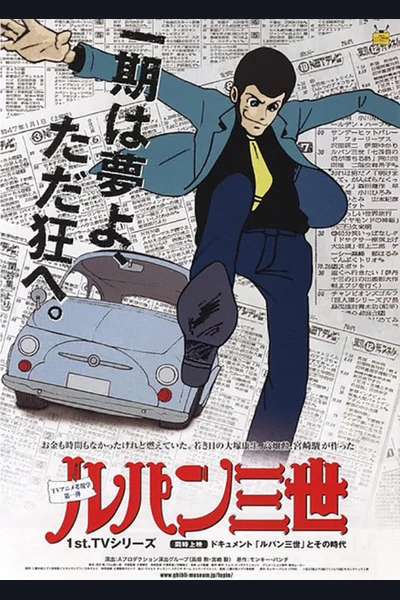
Arsène Lupin III is the grandson of Maurice Leblanc's gentleman thief, a lineage established with more enthusiasm than initial legal diplomacy. He steals jewels, national treasures and occasionally objects whose principal value is that somebody has declared them impossible to steal.
Monkey Punch's manga began in 1967. Television anime followed in 1971 and has continued through numbered Parts, specials and films produced chiefly by TMS Entertainment. The franchise changes jackets, directors and moral temperature while preserving Lupin's grin and Inspector Zenigata's long-term failure to submit a successful arrest report.
Overview
Lupin works with sharpshooter Daisuke Jigen and samurai Goemon Ishikawa XIII. Fujiko Mine is thief, rival, lover and betrayer according to the day's opportunity. Zenigata pursues them with absolute sincerity and enough resilience to survive transport infrastructure that no longer exists afterwards.
Stories range from light capers to adult crime and surreal espionage. Continuity is loose. Jacket colours help identify broad eras—green, red, pink, blue—but do not constitute a sacred chronology.
Why it matters
Lupin III became a laboratory for animation talent. Directors including Hayao Miyazaki and Isao Takahata worked on the early television series, while later creators repeatedly reinvented the gang. The premise supports comic timing, vehicle action, melancholy and elaborate theft without demanding one house tone.
Its treatment of women and sexual pursuit can be dated or unpleasant, especially nearer the manga's harder edge. Fujiko is nevertheless one of anime's enduring women because she is allowed appetite, competence and disloyalty rather than permanent supporting virtue.
What to expect
Expect gunplay, theft, slapstick, flirtation and stylish travel. Violence varies by production. Family-friendly Lupin and adult Lupin coexist; check the specific film before assuming Cagliostro represents the entire shelf.
Adaptations and versions
Television Parts can usually be sampled independently. The second, red-jacket series is the classic long run; later blue-jacket Parts provide modern entry points. The Woman Called Fujiko Mine is a darker, visually distinctive reimagining.
Miyazaki's The Castle of Cagliostro is the famous film and an excellent adventure, though its gentler Lupin differs from many versions. Specials and films are numerous and optional.
Where to start
Begin with Cagliostro for charm, selected Part II episodes for classic comedy or Part IV for modern continuity. Then follow whichever jacket fits. Completism is unnecessary; Lupin himself would steal the best episodes and leave the filing cabinet.
Verdict The SFcrowsnest take
Lupin III endures because theft is a flexible dramatic profession and the gang's chemistry survives reinvention. The quality varies, the attitudes sometimes creak and the best vehicle chases remain indecently good.
Enter through Cagliostro, but do not stop there. The gentleman thief has several less gentlemanly evenings worth meeting.