
Konosuba
A dead shut-in is reincarnated into a fantasy world saddled with a useless goddess and a dysfunctional party; the genre-skewering comedy that gleefully mocks isekai.
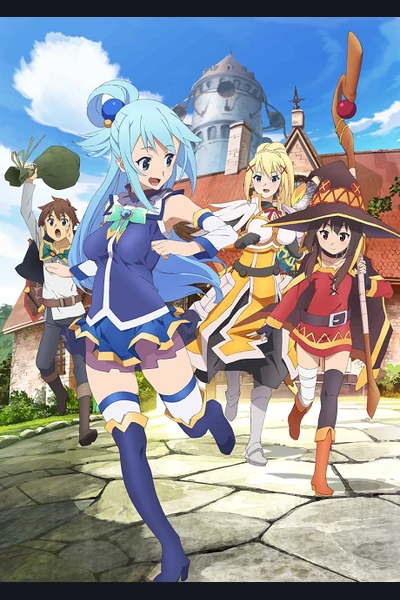
Kazuma Satou dies ignominiously and is offered reincarnation in a fantasy world. Allowed to take one divine advantage, he chooses Aqua, the goddess laughing at him. This proves less like acquiring a sacred weapon and more like stealing the complaints department.
Overview
Natsume Akatsuki's KonoSuba: God's Blessing on This Wonderful World! began as a web novel before becoming a light-novel series, manga and anime. It borrows the familiar isekai apparatus—reincarnated shut-in, adventurers' guild, quests, statistics and Demon King—then fills the heroic party with people magnificently unsuited to efficient heroism.
Aqua is powerful, vain and catastrophically impractical. Megumin is a gifted mage who will cast only one enormous explosion per day, after which she must be carried home. Darkness is a crusader whose enthusiasm for punishment rather compromises her defensive dignity. Kazuma, meanwhile, is less noble chosen one than petty freelance accountant.
Why it matters
The series arrived as reincarnation fantasies were multiplying and understood that their assumptions were already ripe for mockery. Yet parody is only half the trick. These four failures have comic chemistry because their selfishness is specific, their arguments feel lived-in and none can maintain superiority for longer than a scene.
It therefore works even if viewers cannot identify every convention being prodded. The fantasy framework supplies the situation; character timing supplies the laughs.
What to expect
Expect quests derailed by vanity, debt treated as a recurring monster and combat resolved through combinations no responsible guild would insure. The anime embraces loose expressions and elastic movement rather than polishing every character into catalogue poses, a wise decision for comedy.
The humour is frequently bawdy. There are underwear jokes, lechery, masochism, drinking and a protagonist whose adolescent behaviour the story mocks without always placing much distance between joke and indulgence. Its cast are lovable nuisances, not behavioural templates.
Adaptations and versions
The completed light novels are the main source. Manga versions adapt that material, while the television anime selects and rearranges episodes for comic rhythm. A feature film and character-focused spin-off material expand the animated route. Studio Deen handled the early television seasons; later animation moved to Drive without abandoning the established comic personality.
Where to start
Start with the first anime season. Its performances, pauses and spectacularly undignified reaction shots make the party's dysfunction immediately clear. Readers wanting the fullest continuity should then begin the light novels rather than assuming the manga is the original.
Verdict The SFcrowsnest take
KonoSuba asks what happens when a fantasy campaign is staffed entirely by the players other groups quietly stop inviting. The answer is loud, juvenile and very funny. Its occasional descent into grubby fan-service is the price of admission; its saving grace is that dignity is distributed so evenly that nobody receives any.