
Full Metal Panic!
A socially clueless teen soldier is assigned to guard an ordinary schoolgirl, with mecha skirmishes and screwball comedy in roughly equal measure; military SF that knows exactly when to be daft.
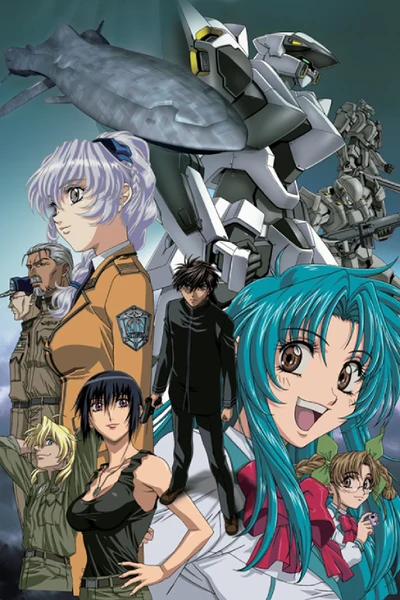
Overview
Full Metal Panic! is military mecha SF repeatedly sabotaged, in the best possible sense, by school comedy. Sousuke Sagara is a teenage mercenary raised by war and assigned to protect Kaname Chidori, a Japanese schoolgirl whose hidden importance attracts the attention of dangerous organisations. Unfortunately, Sousuke's idea of blending into civilian life involves treating lockers, love letters and class trips as potential insurgent activity.
Shoji Gatoh's light novels, and the anime adaptations that followed, build their appeal from that collision. One moment there are Arm Slaves, covert missions and global conspiracies. The next, a traumatised boy soldier is deploying military countermeasures against ordinary adolescence. The poor teachers deserve danger pay.
Why it matters
Full Metal Panic! became a durable favourite because it balances tones that should not easily coexist. The military SF is played with enough seriousness to carry stakes; the comedy is broad enough to make the same protagonist a walking school-safety incident.
The franchise also shows how light-novel storytelling could move comfortably between action, romance and sitcom. Kyoto Animation's comedy-heavy contribution, especially, became a cult favourite by understanding that Sousuke in peacetime may be more dangerous to school property than half the villains.
What to expect
Expect mecha operations, secret organisations, teen romance, slapstick and emotional material around trauma and identity. Sousuke's fish-out-of-water behaviour is funny, but the series does not entirely forget why he is that way. He has been trained for war, not homework.
The balance varies by instalment. Some arcs focus on action and conspiracy. Others lean hard into school comedy. That tonal unevenness is either the franchise's charm or its hazard light, depending on one's appetite.
There is violence, militarism and some older comedy that can feel broad or dated, but the central relationship gives the story a warmer core than its hardware might suggest.
Adaptations and versions
The original work is Shoji Gatoh's light-novel series, with manga versions and multiple anime adaptations by different studios. Gonzo handled the first major television adaptation, Kyoto Animation delivered both comic and more dramatic follow-ups, and later material continued elsewhere.
Because the anime is split across productions, final publication should fact-check naming and order. The broad path remains: source novels first for completeness, anime first for accessibility.
Where to start
Start with the first anime series if you want the main premise in motion. Follow with the comedy-focused material if you enjoy the school chaos, or the more serious sequel arcs if the military story has hooked you.
The novels are the fullest route, but the anime gives the franchise's tonal identity quickly: one foot in the cockpit, one foot in detention.
Verdict The SFcrowsnest take
Full Metal Panic! works because it knows war and adolescence are both absurd, though only one usually involves missile locks. It is funny, occasionally bruising and far better calibrated than its genre mash-up has any right to be.