
Fruits Basket
An orphaned optimist lodges with a family cursed to transform into zodiac animals when hugged; tender, devastating shojo, blessed with a flawless modern reboot.
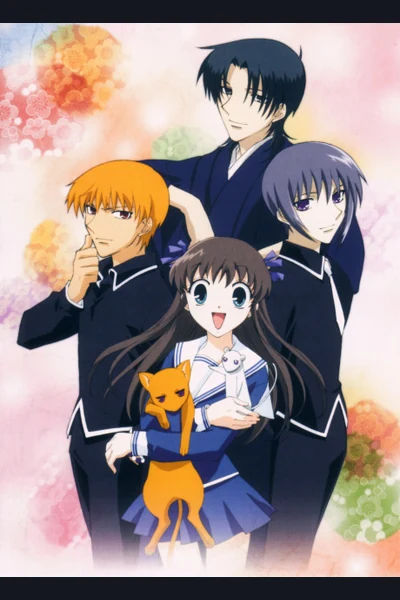
After her mother's death, Tohru Honda lives secretly in a tent until a landslide and the Sohma family expose the arrangement. She moves in with classmates Yuki and Kyo and their older cousin Shigure, then discovers the family curse: certain Sohmas transform into animals of the Chinese Zodiac when embraced by someone of another sex or placed under stress. Emotional difficulty has acquired fur and a strict activation clause.
Natsuki Takaya's manga ran in Hakusensha's Hana to Yume from 1998 to 2006 and filled 23 volumes. Studio Deen produced a 26-episode anime in 2001. TMS Entertainment's 2019–21 adaptation restarted the story and completed the manga across three seasons.
Overview
Tohru becomes close to reserved Yuki and volatile Kyo, the excluded Cat of the Zodiac. Other cursed Sohmas enter with distinct wounds, while family head Akito maintains control through fear, isolation and the claim that abuse is sacred connection.
Tohru's kindness is genuine but also defensive. She cares for others to avoid examining her own grief and terror of abandonment. The story gradually asks its apparent healer to accept that she is not household equipment.
Why it matters
Fruits Basket uses a whimsical curse to discuss intergenerational abuse, trauma and the difference between bonds and captivity. People do not recover because one cheerful girl arrives with soup. They recover unevenly through distance, friendship, anger and difficult choices.
The romance is important, but family structures are the larger subject. Takaya gives even comic side characters interior lives and understands that forgiveness is not identical to restored access.
What to expect
Expect bereavement, child abuse, confinement, bullying and emotionally manipulative family relationships beneath warm school comedy. Violence is intermittent but the psychological material can be intense. Romance develops slowly and rewards avoiding spoilers.
Some gender presentation and the curse's heterosexual trigger reflect the original period and invite discussion rather than a tidy modern label.
Adaptations and versions
The 2001 anime is charming, comic and incomplete, with an original ending and a tone Takaya reportedly disliked. The 2019 series follows the full manga more closely and is the recommended adaptation.
Fruits Basket: Prelude recaps later material and adds background; watch it only after the final season. Fruits Basket Another is a next-generation manga sequel.
Where to start
Begin with the 2019 anime or manga volume one. Save the 2001 version as an alternate period interpretation. Do not search the Zodiac roster too enthusiastically; family trees in this property contain concealed emotional explosives.
Verdict The SFcrowsnest take
Fruits Basket is tender because it knows kindness is work, not because it denies cruelty. Tohru's optimism illuminates the house; it does not excuse what happened inside it.
The manga is excellent and the 2019 anime a thoughtful complete adaptation. Bring tissues, but also boundaries. The series eventually learns why both are useful.