
Fate series (Fate/stay night, Fate/Zero, etc.)
Mages summon famous historical figures as combat servants for a Holy Grail death-match; a continuity so tangled it genuinely warrants a flowchart.
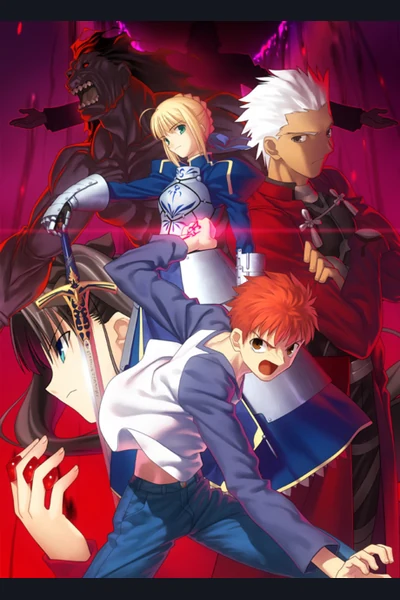
Seven mages summon seven heroic spirits to fight for the Holy Grail, which can grant a wish. The spirits include figures from history and legend, placed into classes such as Saber, Archer and Lancer because magical warfare also requires a filing system. Alliances form, identities are concealed and somebody discovers the Grail's terms are less reassuring than the brochure.
The franchise began with Type-Moon's 2004 visual novel Fate/stay night, written by Kinoko Nasu. Its three routes—Fate, Unlimited Blade Works and Heaven's Feel—reuse the same opening conflict while revealing different characters and truths. Anime, games and parallel worlds have since multiplied until the continuity resembles a family tree struck by experimental lightning.
Overview
Teenager Shirou Emiya becomes a Master in the Fifth Holy Grail War and summons Saber, whose identity is part of the early mystery. Shirou's wish to become a “hero of justice” emerges from survivor's guilt and is tested differently in each route.
Rin Tohsaka, Archer, Sakura Matou, Illyasviel and priest Kirei Kotomine shift importance according to the route. The structure is not repetition for its own sake; each path asks what Shirou's ideal costs when love, contradiction or horror is placed directly in front of it.
Why it matters
Fate's central pleasure is reinterpretation. Historical and mythical figures arrive through magical classification, altered identity and Nasu's own lore. The franchise is playful with history but serious about how legends are used after death.
Ufotable's animation turned these conceptual battles into spectacular screen events. Digital effects, choreography and compositing give Servant combat extraordinary force, though visual splendour cannot explain the plot to anyone who began with a mobile-game anniversary film.
What to expect
Expect violent magical combat, family abuse, sexual material in the original adult visual novel, body horror and dense terminology. Heaven's Feel is substantially darker than the other routes. Romance determines each route's emotional centre.
The franchise's gender-swapped and reinterpreted heroes can be inventive, commercial or both. Historical fidelity is not the objective. King Arthur has already considered the complaint and drawn a sword.
Adaptations and versions
Studio Deen's 2006 Fate/stay night chiefly adapts the Fate route but borrows from others. Ufotable's Unlimited Blade Works television series adapts the second route; its three Heaven's Feel films adapt the third. Fate/Zero, based on Gen Urobuchi's prequel novels, depicts the previous Grail War.
Beyond that lie Apocrypha, Grand Order, Extra, Prisma Illya and others in alternate continuities. They are branches, not homework required before understanding Shirou.
Where to start
For anime, watch Unlimited Blade Works, then the Heaven's Feel trilogy, then Fate/Zero. This preserves some intended revelations. The 2006 series can be tried for Saber's route. Visual-novel readers should follow Fate, Unlimited Blade Works and Heaven's Feel in order.
Verdict The SFcrowsnest take
Fate is complicated because one story was designed as three perspectives and success encouraged the multiverse to breed. At its best, it combines myth, moral argument and magnificent combat. At its worst, the entry instructions require their own route.
Start with stay night, ignore the outer branches until curious and remember that continuity anxiety is not a Command Spell. The Grail probably will not reward completionism anyway.