
Assassination Classroom
A class of misfits is tasked with murdering their tentacled, planet-threatening teacher, who is also the best teacher they have ever had; absurd, and surprisingly moving.
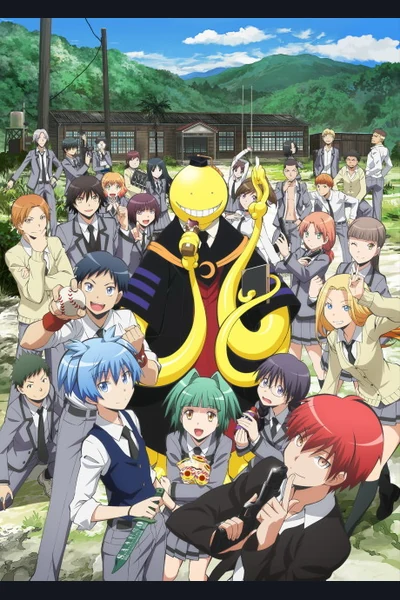
The creature who destroyed most of the Moon intends to do the same to Earth in a year. Until then, he would like to teach Class 3-E mathematics, languages and the correct method for murdering him. The salary package presumably includes danger money and an unusually large stationery allowance.
Overview
Yusei Matsui's Assassination Classroom begins with a glorious contradiction. Koro-sensei is a yellow, tentacled, Mach-20 menace whom governments cannot kill, yet he is also the first adult to regard his supposedly defective pupils as people worth teaching. Their daily assassination attempts become practical lessons; his evasions come with feedback.
Class 3-E occupies the bottom of an elite school's engineered hierarchy. The main narrative belongs not simply to the strongest child but to an ensemble of teenagers discovering aptitudes that exam rankings failed to measure. Nagisa Shiota, quiet and observant, provides the nearest thing to a central viewpoint.
Why it matters
Beneath the absurd weapons and elastic facial expressions is an unusually direct argument about education. The school motivates success by manufacturing outcasts. Koro-sensei does the opposite: he pays attention, adapts his methods and refuses to confuse poor performance with limited worth.
That gives the comedy an emotional foundation sturdier than its premise has any right to possess. It can stage a slapstick anti-tank ambush and still ask useful questions about confidence, competition and what a teacher owes a child.
What to expect
Expect school comedy, science-fiction nonsense, tactical games and a large cast gradually receiving room to breathe. Firearms and knives are everywhere, but much of the violence is deliberately fantastical: specialised anti-sensei weapons are harmless to humans. Later material carries greater emotional and physical weight.
There is some sexual humour, bullying and discussion of abuse, along with the central business of children being trained as killers. The series generally knows the difference between depicting a damaged system and admiring one, though younger viewers may need more context than the cheerful colour scheme advertises.
Adaptations and versions
The original manga ran to a planned conclusion. Lerche's television adaptation covers the main story across two seasons, compressing some episodes and secondary material but retaining the essential arc. Animated specials and two Japanese live-action films also exist; neither is necessary before the standard series.
Where to start
The anime is an excellent first route: brisk, complete and enlivened by vocal performances that sell Koro-sensei's impossible mixture of smugness and care. Choose the manga for Matsui's full classroom roll-call and the pleasure of watching his visual jokes evolve.
Verdict The SFcrowsnest take
Few stories make attempted regicide-by-homework feel this wholesome. Assassination Classroom is funny because its situation is ridiculous, but affecting because its educational anger is not. By the final register it has earned an emotion the opening chapters appear almost biologically incapable of supporting. Bring tissues; anti-sensei ammunition will not help.