Koko
World Fantasy Award winner: the novel that fused horror with the literary war novel and crime fiction, founding the Blue Rose trilogy and the psychological-thriller wing of modern horror.

The essential authors of science fiction, fantasy & horror — and where to start reading them.
Book Entry · Science Fiction
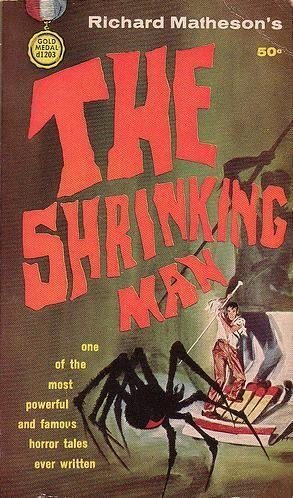
A drift of radioactive spray, an insecticide chaser, and Scott Carey begins losing a seventh of an inch a day — through trouser sizes, through his marriage's mechanics, through employability, fame and a doll's house, toward the cellar where the book's celebrated second front opens: the duel with the black widow spider, fought with pins and dread across a landscape of paint cans. Matheson interleaves the cellar present with the shrinking past, making the SF premise a study of masculinity stripped of every prop. The ending — Scott passing below zero and discovering that to nature there is no zero — is the era's great transcendent last page.
The basis of The Incredible Shrinking Man (1957), whose closing monologue Matheson wrote and which remains 1950s SF cinema's philosophical peak; the novel established the 'domestic catastrophe' mode he made his own.
Prefer Amazon? Buying through these links may earn SFcrowsnest a small commission, at no extra cost to you.
Buy on Amazon UK → Buy on Amazon US →As an Amazon Associate, SFcrowsnest earns from qualifying purchases.
World Fantasy Award winner: the novel that fused horror with the literary war novel and crime fiction, founding the Blue Rose trilogy and the psychological-thriller wing of modern horror.
Winner of both the World Fantasy Award and the Bram Stoker Award for collection: the canonical one-volume Campbell and a standard text in any serious horror education.
Nebula winner and the New Wave's most notorious provocation: time-travel paradox as theology, handled with a seriousness that outlasted the scandal.