Do Androids Dream of Electric Sheep?
Source of Blade Runner (1982), which transformed SF cinema while keeping perhaps a third of the book.

The essential authors of science fiction, fantasy & horror — and where to start reading them.
Book Entry · Science Fiction
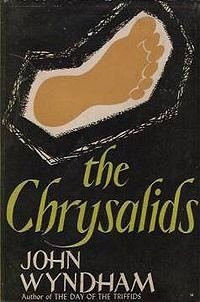
Generations after a nuclear Tribulation, the farming communities of Labrador wage permanent war on deviation: blasphemous crops are burned, mutant livestock slaughtered, and human 'deviations' sterilised and banished to the Fringes — all in the name of the true image of God. David Strorm, son of the district's fiercest zealot, harbours the invisible deviation of telepathy, shared with a scattered handful of children whose discovery is only a matter of time. Wyndham's sharpest book: a study of fundamentalism, difference and flight, with an ambivalent rescue that questions its own rescuers.
A staple of school syllabuses across the Commonwealth and arguably the best thing Wyndham wrote; its influence runs through YA dystopia's entire bloodline.
Prefer Amazon? Buying through these links may earn SFcrowsnest a small commission, at no extra cost to you.
Buy on Amazon UK → Buy on Amazon US →As an Amazon Associate, SFcrowsnest earns from qualifying purchases.
Source of Blade Runner (1982), which transformed SF cinema while keeping perhaps a third of the book.
Hugo winner 2016 — first volume of the unprecedented three-peat — and an instant canon entry: the most influential fantasy novel of its decade, on syllabuses from sixth forms to doctoral programmes.
Hugo winner (1968) and the foundational evil-AI text; its shadow lies over everything from The Terminator to modern AI-risk rhetoric, and the 1995 game adaptation (with Ellison voicing AM) is a cult classic.