Cryptonomicon
Locus winner and a Hugo finalist; the hacker generation's foundational epic, credited with seeding real cypherpunk and cryptocurrency thinking, and gateway to his Baroque Cycle prequels.

The essential authors of science fiction, fantasy & horror — and where to start reading them.
Book Entry · Science Fiction
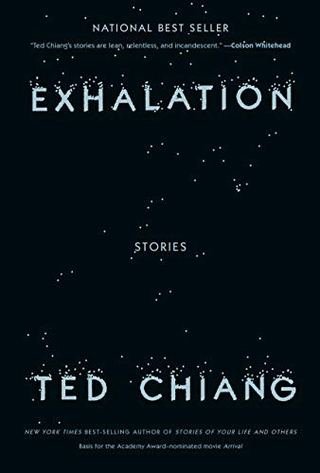
The second collection, seventeen years on. In the title story, a mechanical scientist dissects his own brain — air-driven, gold-leafed, exquisite — and deduces the heat death of his universe from the equalising pressure that is thinking itself. 'The Lifecycle of Software Objects' raises digital beings over decades and asks what we owe minds we can pause; 'The Merchant and the Alchemist's Gate' runs time travel through the Thousand and One Nights with paradox-free compassion; 'Omphalos' builds a young-Earth creationist cosmology that is empirically true and tests faith anyway. Calm, exact and quietly devastating throughout.
Multiple Hugo and Locus wins among its contents; the title story in particular — entropy as first-person elegy — is already standard anthology canon.
Prefer Amazon? Buying through these links may earn SFcrowsnest a small commission, at no extra cost to you.
Buy on Amazon UK → Buy on Amazon US →As an Amazon Associate, SFcrowsnest earns from qualifying purchases.
Locus winner and a Hugo finalist; the hacker generation's foundational epic, credited with seeding real cypherpunk and cryptocurrency thinking, and gateway to his Baroque Cycle prequels.
Hugo winner (1989) and a regular pick for the best SF novel about cloning ever written; its psychogenesis arguments anticipate decades of behavioural-genetics debate.
Hugo, Nebula and Locus winner; the standard against which all political SF is measured, taught in politics departments as readily as literature ones.