
The Rising of the Shield Hero
Summoned to save a world and then promptly framed and abandoned, a hero rebuilds himself on a diet of grievance and grit; the bitter, vengeful flavour of isekai.
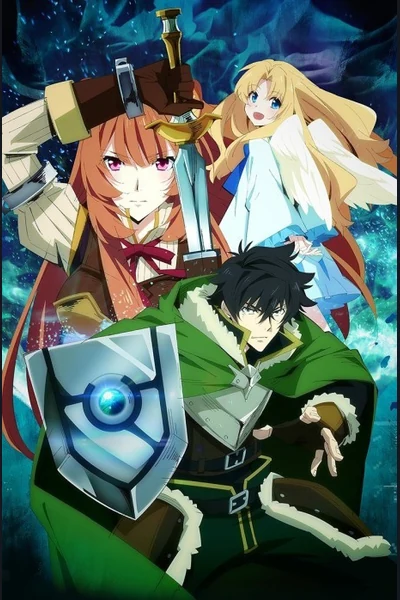
Naofumi Iwatani is summoned to another world as one of four Cardinal Heroes. His shield prevents him from attacking effectively, the kingdom distrusts his role, and a companion falsely accuses him of sexual assault before stealing his property. Ostracised and furious, he begins rebuilding through trade, defence and a grievance large enough to require its own equipment slot.
Overview
Aneko Yusagi's story began as a web novel before becoming light novels, manga and anime. Naofumi must prepare for catastrophic Waves while learning to exploit the Shield's game-like upgrade system. Unable to fight alone, he purchases Raphtalia, an enslaved demi-human child who matures rapidly as her level rises, and later gathers a surrogate party.
The appeal lies in defensive problem-solving and the recovery of a protagonist denied ordinary heroic approval. Naofumi develops medicines, bargains fiercely and protects people whom the celebrated heroes overlook. His anger gives early episodes unusual bite within the crowded isekai field.
Why it matters
The series became a prominent example of revenge-flavoured isekai: institutions fail the hero, public opinion condemns him and competence becomes vindication. That fantasy resonated strongly, but the mechanism deserves scrutiny.
Its opening uses a false sexual-assault allegation as fuel for male persecution, then portrays slave ownership as practical and emotionally benevolent. Raphtalia gains agency and devotion, yet the story repeatedly softens a coercive structure because the owner is kind. These are not small atmospheric details; they shape the moral contract.
What to expect
Expect fantasy combat, levelling systems, monster waves, political hostility and a protagonist whose bitterness only gradually admits trust. Violence, slavery, discrimination, torture and sexual-assault themes make the colourful adventure unsuitable for casual family viewing.
Later arcs widen the world and soften the singular revenge drive, sometimes losing the abrasive focus that distinguished the beginning. Viewers may find Naofumi's growth satisfying while remaining unconvinced by the story's treatment of the women used to establish it.
Adaptations and versions
The published light novels revise and expand the original web story and are the main source. The manga adapts them with its own pacing. Kinema Citrus led the television anime, which reshapes some character emphasis and compresses material as it moves through successive arcs.
Spin-offs centred on other heroes exist, but they are not required to understand Naofumi's route.
Where to start
The anime provides the fastest test of whether its mixture of resentment, strategy and party-building works for you. Choose the light novels for fuller mechanics and internal narration. In either case, the first arc presents the decisive ethical reservations early.
Verdict The SFcrowsnest take
Shield Hero has a strong mechanical hook and understands the satisfaction of a defence nobody valued becoming indispensable. It also builds that satisfaction atop false accusation and sanitised slavery, then asks affection to settle the account. For some readers the character recovery will carry it; for others the moral bookkeeping is overdrawn. The guide should say so plainly.