
Ranking of Kings (Ousama Ranking)
A tiny, deaf, much-derided prince sets out to become the greatest king of all; a deceptively gentle storybook fantasy that quietly breaks your heart.
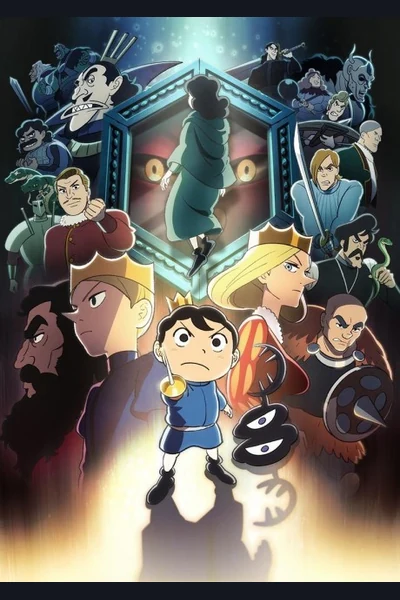
Prince Bojji is small, physically weak and deaf. Courtiers laugh when they think he cannot understand them; the future king understands rather too much. His first true friend is Kage, survivor of a clan of living shadows and initially the sort of companion who steals your clothes before offering emotional support.
Overview
Sosuke Toka's manga wears the round shapes and clean colours of a children's picture book. Beneath them sits a dynastic fantasy of curses, assassination, parental damage and political compromise. Bojji wants to become the world's greatest king, though everyone around him defines greatness through strength he does not possess.
His journey is paired with upheaval at home following the death of his gigantic father, King Bosse. Stepmother Hiling, half-brother Daida, the enigmatic mirror and the kingdom's retainers refuse simple alignment into kind faces and wicked ones.
Why it matters
The series places a disabled hero at the centre without making deafness a moral lesson for the hearing cast. Bojji communicates through sign language, lip-reading and expression. His disability shapes experience, but courage and tactical skill grow around it rather than awaiting a magical cure.
Its other great strength is moral revision. Apparent villains acquire histories; loving people cause harm; redemption remains possible without pretending damage did not occur. The fairytale form becomes a machine for challenging first impressions.
What to expect
Expect tenderness, eccentric combat, betrayal and distressing violence hidden beneath an inviting visual surface. Children are abused, manipulated and placed in danger. Bodies are wounded, creatures die and grief drives adults towards terrible bargains.
The sympathy is generous, occasionally too generous. Some acts receive forgiveness more quickly than their victims might reasonably grant it. The later plotting also crowds its board with reversals, but Bojji and Kage keep the emotional route visible.
Adaptations and versions
The web manga is the source. Wit Studio's television adaptation supplies wonderfully fluid movement and expressive signing while preserving the storybook design. Its first long series forms the principal narrative journey of the animated version.
The Treasure Chest of Courage collects side stories and missing episodes around familiar characters. It is not a straightforward second season, despite occupying the sort of listing position that encourages this assumption.
Where to start
Begin with the anime. Its animation communicates Bojji's physical and emotional intelligence with exceptional clarity. Choose the manga to continue at the source's pace, checking publication and translation status before assuming every chapter is available in one territory.
Verdict The SFcrowsnest take
Ranking of Kings looks gentle enough for nursery shelving and then produces a knife, a curse and an argument about inherited power. Its compassion is sometimes untidily distributed, but Bojji and Kage form one of modern fantasy's loveliest friendships. Greatness, it turns out, requires better measurements than the ranking office supplied.