
Spice and Wolf
A travelling merchant and a centuries-old wolf-goddess haggle, flirt and corner medieval markets; fantasy whose true magic is supply, demand and slow-burn romance.
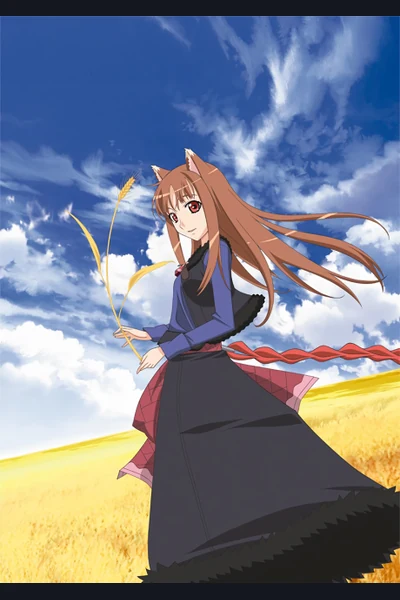
Travelling merchant Kraft Lawrence finds a naked young woman asleep among the hides in his wagon. She has wolf ears, a tail and a formidable opinion of his business practice. Holo is an ancient harvest deity whose village no longer needs her. She wants passage north; Lawrence sees opportunity. Both underestimate the accounting implications of companionship.
Overview
Isuna Hasekura's light novels follow Lawrence and Holo through a medieval European-inspired world of trading towns, church power and changing agricultural life. Their adventures turn on currency values, credit, speculation, smuggling and the dangerous possibility that somebody else has read the contract more carefully.
The economics are also courtship. Lawrence and Holo bargain over information and feelings because each fears surrendering leverage. She possesses centuries of wit and loneliness; he has commercial discipline and a dream of owning a shop. Their horse deserves additional compensation.
Why it matters
Fantasy markets are often places where heroes spend unexplained gold between quests. Spice and Wolf makes the market the quest. A coin's silver content, a harvest forecast or access to transport can threaten lives without one wizard raising a staff.
Its enduring strength is the central conversation. Holo and Lawrence tease, wound, reassure and misread one another with adult complexity. Romance grows not from destiny but from miles of shared travel and the gradual recognition that profit is not the only form of value.
What to expect
Expect long conversations, economic puzzles, church intrigue and a slow-burn relationship. There are occasional fights and supernatural displays, but anyone waiting for Holo to solve every trade dispute by becoming a giant wolf has misunderstood both her pride and the wagon's suspension.
The series' nudity is generally non-explicit, though promotional imagery can lean more heavily on Holo's body than the thoughtful text requires. Its medieval economics are dramatised and selective, not a substitute for regulated financial advice.
Adaptations and versions
The light novels are the main and most extensive version. A manga adaptation condenses their journey. The 2008 television anime and its sequel adapt early arcs while making some changes.
The later Spice and Wolf: Merchant Meets the Wise Wolf begins the story again with new animation and a different adaptation plan. It is a remake, not a third season of the older series. The two productions can be watched independently.
Where to start
The modern anime offers the smoothest screen entrance; the older adaptation retains considerable charm and fine performances. Begin with novel one for the complete journey and Lawrence's commercial reasoning, which animation must occasionally put through customs.
Verdict The SFcrowsnest take
Spice and Wolf proves that exchange rates can carry romantic suspense if the people calculating them are sufficiently alive. Clever, warm and patient, it treats companionship as a market neither participant can control. Holo may be the Wise Wolf, but the finest investment is listening when she explains why you are wrong.