
Slam Dunk
A delinquent joins the basketball team to impress a girl and discovers he loves the game; arguably the sports manga, and it single-handedly grew Japanese basketball.
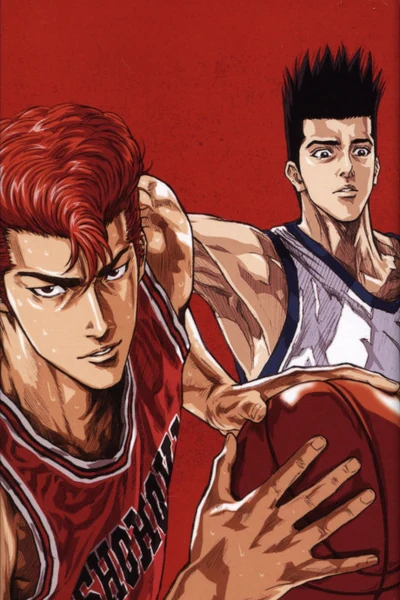
Hanamichi Sakuragi is a red-haired school delinquent who has been rejected by fifty girls, a statistic maintained with the solemnity of a sporting record. When Haruko Akagi asks whether he likes basketball, he says yes despite knowing almost nothing about it. The lie gets him into Shohoku High's team. The game does the rest.
Takehiko Inoue's manga ran in Shueisha's Weekly Shonen Jump from 1990 to 1996 and filled 31 volumes. Toei Animation's television series aired from 1993 to 1996. Inoue later wrote and directed the 2022 film The First Slam Dunk, returning to Shohoku with a new visual language and a different character at the emotional centre.
Overview
Sakuragi begins with height, athleticism and no discipline. He clashes with gifted first-year Kaede Rukawa, captain Takenori Akagi and the basic principle that touching the ball is not automatically a personal triumph. Point guard Ryota Miyagi and returning shooter Hisashi Mitsui complete a team whose potential depends upon several difficult personalities agreeing which basket matters.
The early manga is delinquent comedy with basketball attached. Inoue gradually shifts the balance as Sakuragi learns rebounding, defence and the satisfaction of work nobody applauds in advance.
Why it matters
Slam Dunk helped drive Japanese interest in basketball and became a major cultural force across Asia. It did so by teaching the sport through character rather than instruction. Rules matter because Sakuragi breaks them; technique matters because effort alone stops being enough.
Inoue's art develops into superb sports draughtsmanship. Bodies have weight, exhaustion and momentum. A hand on a jersey or foot near a boundary can carry an entire page's tension. Opponents remain athletes rather than villains, which makes defeat hurt properly.
What to expect
Expect school fighting, broad comedy, bruising matches and gradual technical growth. Violence outside sport is moderate; injuries and physical exhaustion matter. Romance is the excuse that brings Sakuragi to the gym and then wisely steps aside.
The television anime is lively and charming but paced for weekly broadcast. It stops before adapting the manga's national tournament conclusion, an omission comparable to ending a climb when the mountain finally becomes visible.
Adaptations and versions
The manga is the complete original and recommended route. Toei's series covers much of the school journey with several companion films that are mostly optional.
The First Slam Dunk uses computer-assisted animation to depict a major late match while foregrounding Ryota Miyagi. It works for newcomers but carries greater force after knowing the team, and it does not replace all the manga material between television and film.
Where to start
Read manga volume one for the full progression. The classic anime is an enjoyable entrance, but plan to transfer to the books. Watch The First Slam Dunk after the manga for maximum effect, or use it as proof that the old team still knows how to fill a cinema.
Verdict The SFcrowsnest take
Slam Dunk begins with a boy pretending to love basketball and ends by making the reader understand why he no longer has to pretend. Its comedy is loud, its sport exact and its growth earned one unglamorous drill at a time.
The manga is among the finest sports comics ever drawn. No superpowers, no death match, just five players discovering that a team is not an audience for individual talent. That turns out to be more than enough.