
Record of Lodoss War
Elves, dwarves, a young swordsman and a dark lord, lovingly transcribed from a tabletop campaign; the OVA that showed the West what high-fantasy anime could be.
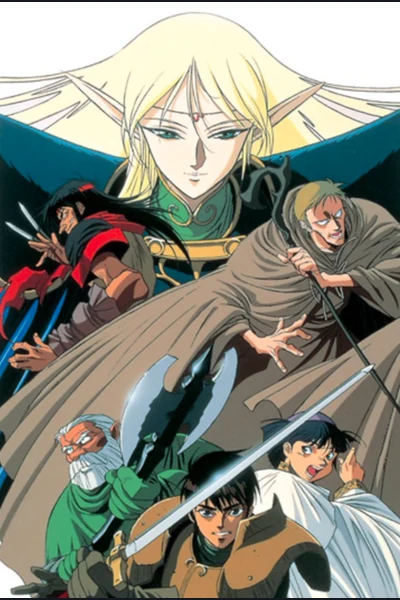
On the cursed island of Lodoss, young swordsman Parn sets out to discover why his disgraced father died. He acquires the traditional travelling equipment: an elf, a dwarf, a cleric, a thief and a wizard. If the innkeeper has a cellar full of giant rats, the paperwork has been completed correctly.
Overview
Ryo Mizuno's fantasy originated in published “replays” of tabletop role-playing sessions before developing into novels, manga and animation. Parn's companions—Deedlit, Ghim, Eto, Woodchuck and Slayn—retain the clear silhouettes of an adventuring party, while wars among Lodoss's kingdoms draw them towards the dark emperor Beld and the witch Karla.
The setting is unapologetic high fantasy: dragons guard ancient power, monarchs lead armies and magic comes in recognisable schools. Its distinction lies not in dismantling the furniture but in arranging it with conviction.
Why it matters
Lodoss War helped establish the language of Western-style fantasy in Japanese popular culture. Deedlit's long ears and sylvan elegance became particularly influential, echoing through later manga, anime and game designs.
Internationally, the lavish 1990 OVA was a gateway work: here was animation delivering the sort of fellowship, tragedy and sorcery associated with fantasy novels and role-playing campaigns, without treating the genre as parody or children's decoration.
What to expect
Expect noble heroes, dark knights, political alliances, romantic yearning and beautifully staged moments sometimes connected by brisk narrative scaffolding. The OVA assumes viewers can infer the campaign notes mislaid between episodes. Character archetypes are broad, though their sincerity supplies much of the charm.
Violence and death occur within an elevated storybook tone. Gender roles and racial fantasy conventions reflect the work's era and sources; the iconic elf receives considerably more visual attention than most of the political economy.
Adaptations and versions
There is no single simple screen order. The 13-part OVA adapts an early version of the story and creates its own resolution. The later television series Chronicles of the Heroic Knight retells part of that material before continuing along a different novel-based route, complete with an abrupt transition likely to make newcomers check whether an episode escaped.
Multiple novels and manga cover different Lodoss stories. Legend of Crystania and other related works extend the wider setting rather than serving as compulsory prologues.
Where to start
Begin with the 1990 OVA. It is compact, handsome and culturally central. Continue with Chronicles if you want more of the novel storyline, accepting its partial reset. Readers seeking the broadest canon should then investigate Mizuno's prose editions available in their language.
Verdict The SFcrowsnest take
Record of Lodoss War is fantasy before the genre developed anxiety about looking like fantasy. Familiar, earnest and gorgeously illustrated, it offers the pleasure of a campaign whose players took the world seriously. The map has a cursed island, the elf is magnificent and somebody remembered the cleric. Sometimes that is precisely the quest required.