
Ranma 1/2
A martial-arts boy cursed to turn into a girl whenever splashed with cold water; Takahashi's gender-swapping farce remains a reliable gateway drug for new fans.
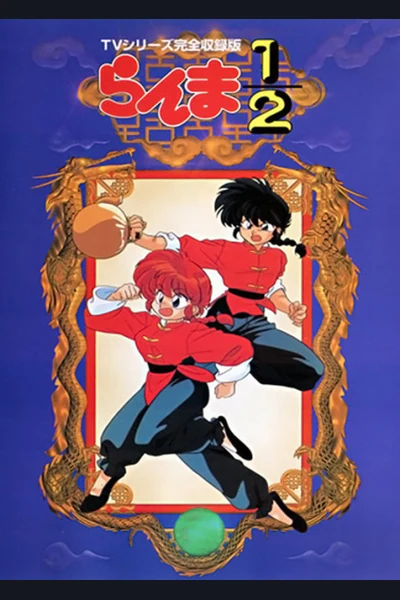
Martial artist Ranma Saotome falls into a cursed spring in China and thereafter transforms into a girl when splashed with cold water, returning to male form with hot. His father Genma becomes a panda under the same conditions. They arrive at the Tendo dojo, where Ranma learns he has been engaged to Akane Tendo by fathers who regard their children's consent as a minor obstacle to efficient succession planning.
Rumiko Takahashi's manga ran from 1987 to 1996 in Shogakukan's Weekly Shonen Sunday and filled 38 volumes. A long television anime began in 1989 under Studio Deen, followed by OVAs and films. MAPPA launched a new adaptation in 2024, returning the material to the beginning with a more manga-faithful pace.
Overview
Ranma and Akane quarrel, care for one another and attract a growing queue of fiancées, rivals and cursed martial artists. Ryoga Hibiki transforms into a small black pig and cannot navigate. Shampoo becomes a cat. Principal Kuno weaponises Hawaiian shirts. Almost any activity—cooking, skating, tea ceremony—can become a martial-arts discipline if the episode requires property damage.
The transformation curse drives farce but also makes Ranma's relationship with gender unusually flexible for a mainstream 1980s comedy. Ranma insists upon a male identity while sometimes using, enjoying or resenting the female body according to circumstance.
Why it matters
Ranma ½ became a major international gateway manga and anime. Takahashi's panel timing, ensemble escalation and ability to sustain unresolved romance influenced decades of comedy.
The gender premise has invited queer and trans readings because it permits bodily change without moral punishment and repeatedly exposes gendered expectations as performance. The text is not a modern treatise: it also relies on binary assumptions, voyeurism and jokes about unwanted exposure. Both the liberating possibilities and dated framing are real.
What to expect
Expect slapstick violence, nudity, sexual comedy, jealousy and very slow romantic progress. Characters routinely ignore boundaries. Happosai's harassment is especially tiresome, and “it was the era” explains context without improving the joke.
The martial arts are inventive nonsense rather than realistic combat. Romance is the emotional anchor even when neither lead can speak honestly for more than twelve seconds.
Adaptations and versions
The classic anime expands and rearranges the manga, adds original episodes and never adapts the ending. OVAs provide some later stories with stronger production. Films are optional comic adventures.
MAPPA's remake starts again, uses modern colour and follows Takahashi more closely. Current season coverage should be checked at publication.
Where to start
The remake is the easiest contemporary entrance. The manga remains the complete source and sharpest version of Takahashi's timing. Choose the classic anime for period charm and an exceptional supply of episodes, accepting that the romantic finish line has been moved off-site.
Verdict The SFcrowsnest take
Ranma ½ is a brilliant comic engine fuelled by transformation, pride and the inability of teenagers to state the obvious. Some fuel has aged badly; the machine still moves with astonishing speed.
Takahashi's manga is the essential version, while both anime have distinct appeal. Recommended with caveats for viewers who enjoy romantic farce, martial absurdity and cold water functioning as a complete costume department.