
Patlabor
In a near-future where mecha do the heavy construction, a put-upon police unit uses its own labour robots to collar the ones gone wrong; SF as wry, grounded workplace drama.
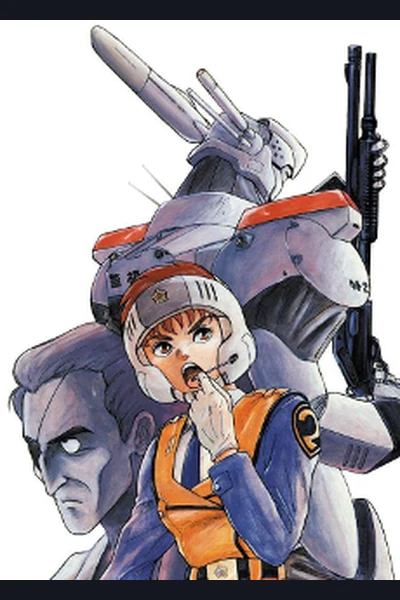
In a near future saturated with construction robots called Labors, Tokyo police establish Special Vehicles Section 2 to handle Labor crime. Its officers receive their own patrol machines, unreliable funding and a headquarters built on reclaimed land where lunch may depend upon what Captain Goto can persuade somebody to catch.
Overview
Mobile Police Patlabor was created by the Headgear collective, including manga artist Masami Yuki, director Mamoru Oshii, writer Kazunori Ito, designer Yutaka Izubuchi and character designer Akemi Takada. That shared origin produced parallel manga and animated versions rather than one sacred source with obedient copies.
Enthusiastic pilot Noa Izumi treats her Ingram Labor, Alphonse, with greater tenderness than some officers extend to colleagues. Her unit includes the heavily armed Ota, wealthy and capable Clancy Kanuka, gentle giant Hiromi and Asuma Shinohara, reluctant heir to a Labor manufacturer. Goto manages them through apparent idleness, strategic insight and the expression of a man watching paperwork breed.
Why it matters
Patlabor makes giant robots ordinary enough to become municipal equipment. That shift allows stories about maintenance, software, labour relations, corporate misconduct and police bureaucracy. Technology changes the work but does not abolish office politics or the requirement to requisition spare parts.
Its tonal range is exceptional. The same cast supports workplace farce, monster-movie parody, procedural mystery and Oshii's grave political thrillers. Mecha become part of society rather than an excuse to suspend it.
What to expect
Expect character comedy and patient procedural detail more often than robot duels. When action comes, the Ingrams move like expensive industrial machines subject to balance, damage and supervisors asking who approved overtime.
The police premise carries assumptions worth examining, and some humour reflects its late-1980s origin. Overall, however, the affection lies with an eccentric public-service team rather than fantasies of unchecked force.
Adaptations and versions
The original seven-episode OVA leads into the first two films in one continuity. A separate television series runs for 47 episodes and continues into The New Files OVAs. Yuki's manga develops another substantial version.
The first film balances team mechanics with technological suspense; Patlabor 2 shifts towards austere political cinema and barely requires its robots to justify the title. Later animation and live action extend the property, but newcomers need not patrol every district.
Where to start
Try the original OVA for a compact sample of the full tonal range. Choose the television series for more time with Section 2, or the first film if a serious technological thriller is the immediate attraction.
Verdict The SFcrowsnest take
Patlabor understands that the most believable future for giant robots includes maintenance rotas and somebody objecting to the fuel bill. Warm, clever and remarkably flexible, it finds science fiction in the workplace consequences other mecha stories leave outside the hangar. Captain Goto has read the incident report. He was hoping you had not.