
Overlord
A player is trapped in his MMO as his own skeletal overlord avatar and decides, with eerie calm, to conquer the world; isekai told from the villain's throne.
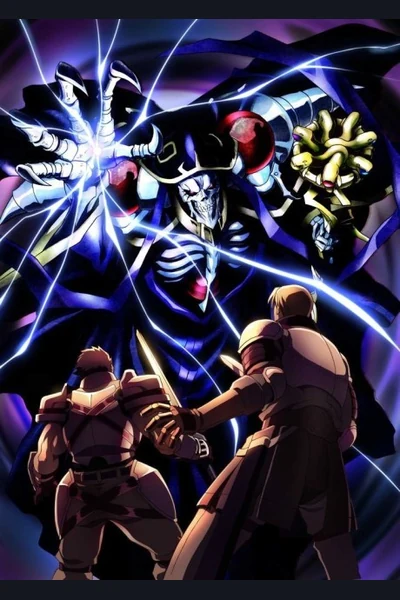
As the online game Yggdrasil shuts down, guild leader Momonga remains logged in to farewell the tomb of Nazarick. Midnight passes; the world persists; non-player characters begin displaying personalities. Momonga is trapped in the body of his skeletal overlord, surrounded by devoted monsters who believe his every hesitation is evidence of unfathomable genius. Management has had worse first mornings.
Overview
Kugane Maruyama's light novels follow Momonga—renamed Ainz Ooal Gown—as he investigates the new world and searches for signs of other players. Nazarick's guardians were designed by his absent guildmates as beautiful, grotesque and frequently evil characters. Now sentient, they interpret conquest and cruelty as the natural expression of Ainz's will.
The joke is that Ainz improvises while his subordinates construct brilliant explanations. The darker truth is that his undead nature steadily distances him from human feeling. This is not a hero accidentally wearing villainous armour. It is a villain's empire viewed from the throne, with occasional concern about the staff meeting.
Why it matters
Overlord reverses the usual game-world power fantasy by making overwhelming strength a source of moral horror. Battles often concern not whether Nazarick can win but what happens to ordinary people caught beneath an entity operating beyond their scale.
Its broad viewpoint gives minor kingdoms, adventurers and workers enough life to make their destruction matter. The series invites fascination with Nazarick's competence while repeatedly exposing the price. Whether it always maintains enough critical distance is a fair argument, not a failure to understand the premise.
What to expect
Expect strategy, dark comedy, court politics, elaborate powers and long stretches away from Ainz as other factions prepare for the catastrophe called the protagonist. Violence includes torture, slavery, massacre and genocide. Some scenes revel in cruelty; viewers seeking a secretly kind antihero should adjust the satnav.
The large cast and tiered magic system reward attention. So does accepting that tactical suspense cannot come from equal combat when Ainz has arrived with the fantasy equivalent of administrator privileges.
Adaptations and versions
The light novels are the principal source and contain the fullest internal reasoning and world detail. Madhouse's anime compresses that material, occasionally relying on conspicuous computer-generated armies to represent a scale the schedule would prefer not to draw by hand.
The manga is another adaptation rather than the source. Compilation films and later feature material condense or continue portions of the animated route; release order remains simplest.
Where to start
The anime quickly establishes Nazarick's personalities and black comic timing. Start with the novels if politics, perspective shifts and the precise gulf between Ainz's thoughts and reputation are the main attraction.
Verdict The SFcrowsnest take
Overlord is an isekai power fantasy that asks whether power remains fun after everyone else becomes furniture. Often witty, sometimes queasy and occasionally too pleased with its own atrocities, it earns attention by refusing to repaint conquest as uncomplicated heroism. Ainz is very good at ruling the world. This is not the same as being good.