
Monster
A heroic surgeon saves a boy who grows into a serene monster, then must hunt his own good deed across Europe; a peerless, novelistic thriller with no wasted frame.
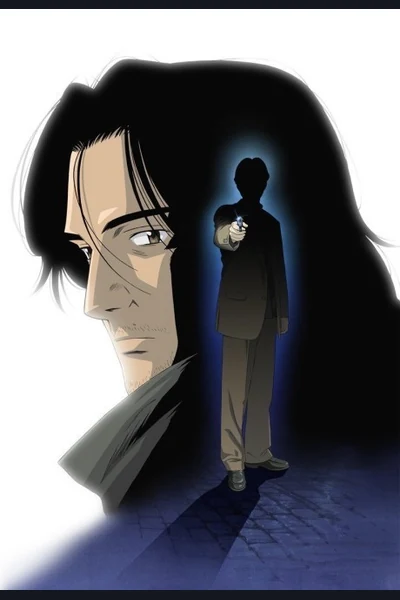
Dr Kenzo Tenma is a brilliant Japanese neurosurgeon working in West Germany. Ordered to abandon an injured boy in favour of an important politician, he refuses and saves the child, Johan Liebert. Years later Tenma discovers that Johan has become a murderer of almost supernatural composure. The surgeon's finest act has returned as an accusation.
Naoki Urasawa's manga ran in Shogakukan's Big Comic Original from 1994 to 2001 and filled 18 volumes. Madhouse adapted it into a 74-episode television anime in 2004–05, following the manga with unusual fidelity and the confidence to let an adult thriller remain adult, slow and uninterested in adding a mascot.
Overview
Tenma travels through Germany and Central Europe trying to understand and stop Johan while police inspector Heinrich Lunge pursues Tenma as the more rational suspect. Johan's twin sister Nina seeks her own history; former spy Wolfgang Grimmer carries the emotional wreckage of state experimentation behind an almost immovable smile.
The story moves through hospitals, border towns, orphanages and institutions shaped by Nazism, East German authoritarianism and post-Cold War transition. Evil is not imported as a foreign substance. It grows through abuse, ideology, opportunism and people deciding another life is abstract.
Why it matters
Urasawa constructs suspense from character rather than concealed mechanics. A minor figure may occupy several chapters before their connection becomes clear. This generosity gives the conspiracy human scale and makes each threatened life matter beyond function.
Johan is frightening because he rarely needs physical force. He identifies the emptiness, fear or vanity already inside a person and supplies a direction. Tenma's answer is stubbornly medical: a life retains value even when saving it has produced terrible consequences.
The series' moral argument is demanding rather than naive. Tenma's refusal to kill does not keep him clean; it keeps returning him to responsibility. The question is not whether Johan deserves mercy but whether Tenma can destroy his own ethic without letting Johan decide who he becomes.
What to expect
Expect murder, child abuse, suicide, political extremism, alcoholism and psychological manipulation. Violence is realistic rather than splatter-heavy. There is little romance and almost no relief supplied on schedule.
The pace is novelistic. Some viewers will call it slow; others will notice that the apparent detours are the story's proof that Europe contains people rather than clue dispensers.
Adaptations and versions
The anime is remarkably close to the manga, reproducing its chronology and atmosphere rather than reinventing it. The manga offers Urasawa's page turns and slightly faster reading; the anime adds measured performances, sound and period geography.
Urasawa's novel Another Monster expands background after the main work and should be approached only after completion.
Where to start
Begin with manga volume one or anime episode one. Choose according to preferred pace, not completeness; both tell the whole story. Avoid character searches, because even an innocent cast list can behave like Johan and quietly ruin several lives.
Verdict The SFcrowsnest take
Monster is a moral thriller of exceptional patience. It asks whether one life is equal to another, then places that belief under pressures designed to make certainty look childish.
The manga is masterful; Madhouse's anime one of the finest faithful adaptations in the medium. No superpowers, no convenient monster—only people, which is precisely the trouble.