Mobile Suit Gundam
Giant robots once used to say genuinely serious things about war; the granddaddy of the mecha genre and a plastic model-kit empire all by itself.
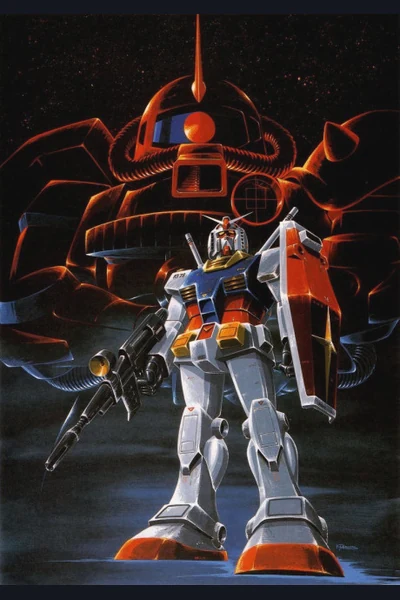
In 1979, Mobile Suit Gundam looked at giant robots and asked whether they might be military hardware rather than weekly divine interventions. The answer involved teenage pilots, colonial politics, mass casualties and a toy sponsor initially wondering why the new machine spent so much time discussing trauma.
Created under director Yoshiyuki Tomino at Sunrise, the original series established the Universal Century and the RX-78-2 Gundam. Television ratings were modest and the run was shortened, but compilation films, reruns and plastic model kits transformed it into a foundational franchise. Cancellation has rarely been made to look so temporary.
Overview
The original follows civilian Amuro Ray after war reaches the space colony Side 7. He pilots the prototype Gundam aboard the refugee-filled White Base, fighting the Principality of Zeon and its masked ace Char Aznable. Neither side is reduced to monsters; both contain soldiers, civilians, ideology and leaders willing to convert them into acceptable losses.
The “real robot” approach treats mobile suits as manufactured weapons requiring maintenance, pilots and supply. Newtypes introduce a more visionary strand: human awareness evolving through life in space, then being recruited by militaries before anybody has settled what it means. Humanity discovers a possible expansion of empathy and immediately requests targeting applications.
Why it matters
Gundam changed mecha anime by making war systemic. The robot can be extraordinary without making battle clean. Amuro's skill does not protect him from fear, isolation or command pressure. Char's charisma does not simplify his motives. Politics continues while young people absorb the recoil.
The franchise also became inseparable from Gunpla model kits, a commercial empire that funds further animation while inviting fans to spend weekends applying transfers the size of punctuation. Commerce did not erase the anti-war themes, but the relationship between critique and collectable weapon remains productively awkward.
What to expect
Expect military action, political factions, character deaths and young pilots under pressure. The original animation is dated in places and contains production shortcuts, yet Tomino's staging and Yasuhiko's character work remain effective. Later entries vary from grim war stories to tournaments, school drama and self-aware model-kit adventures.
There is no single Gundam tone and no requirement to understand every timeline. The franchise is a shelf, not an examination.
Adaptations and versions
Universal Century begins with the 1979 series or its three compilation films, then continues through Zeta Gundam, ZZ, Char's Counterattack and numerous side stories. The films compress the original effectively but sacrifice character texture.
Alternate-universe series—including Gundam Wing, SEED, 00, Iron-Blooded Orphans and The Witch from Mercury—create separate continuities with their own entry points. Manga, novels, games and model-kit series expand each branch without forming one mandatory order.
Where to start
For history, watch the original series or compilation films. For a modern standalone entrance, choose The Witch from Mercury, Gundam 00 or Iron-Blooded Orphans according to taste. For the full Universal Century argument, use release order. Do not begin by reading a timeline chart large enough to affect local planning permission.
Verdict The SFcrowsnest take
Gundam is not important because it made giant robots serious; giant robots were already serious to the children buying them. It matters because it made the systems around them—war, industry, ideology and damaged pilots—part of the machine.
The original remains rough, intelligent and essential. The larger franchise is inconsistent but unusually capable of reinventing its political concerns. Start somewhere, build cautiously and remember that every magnificent model represents a weapon the story would prefer adults had not handed to a teenager.