Master Keaton
A half-British insurance investigator, ex-SAS survival instructor and frustrated archaeologist solves cases across Europe; a warm, erudite, Tintin-flavoured adventure - and a strong suspect for that 2CV memory of yours.
Overview
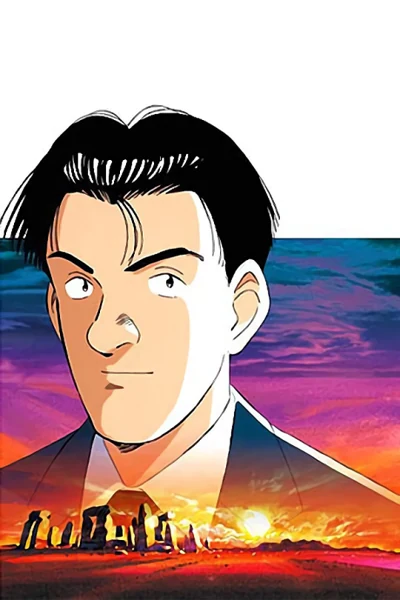
Master Keaton is the thinking reader's adventure serial: half insurance investigation, half archaeology lecture, half survival manual, which does make three halves but feels entirely in character. Created by Naoki Urasawa with Hokusei Katsushika, it follows Taichi Hiraga-Keaton, a half-Japanese, half-British investigator whose CV includes archaeology, the SAS and a talent for walking into other people's trouble with a politely furrowed brow.
The series wanders through Europe and beyond, solving crimes, uncovering histories and treating human decency as a useful field tool. It is not a loud work. It is the sort of manga that would rather produce a map, a moral complication and a cup of tea before drawing the gun.
Why it matters
Master Keaton is important partly because it shows Urasawa's gift for humane suspense before his later international reputation hardened around works such as Monster and 20th Century Boys. The storytelling is episodic, but rarely disposable. Cases become little windows into war memory, family regret, Cold War aftershocks, class, greed and the stubborn durability of old stories.
It also has a distinctive cross-cultural flavour. Keaton's background lets the series move through British and European settings with the curiosity of an outsider and the affection of someone who has clearly packed sensible shoes. There is a whiff of Tintin, a pinch of John le Carre's Europe and a great deal of quietly observant manga craft.
What to expect
Expect self-contained mysteries and adventures rather than one breathless master plot. Keaton investigates insurance claims, suspicious deaths, missing people and historical curiosities, often using scholarship and survival skills rather than brute force. The pleasure lies in watching intelligence applied patiently.
The tone is warm without being soft. There are murders, betrayals and political shadows, but the series has a generous eye for ordinary people trying to live with history's splinters under the skin. It can be sentimental, though usually in the good way, like an old coat that still knows where the train tickets are kept.
Modern readers should be aware that some details of international politics, national character and period setting reflect the era in which it was made. The page's factual notes should get a final check before publication, especially around credits and edition history.
Adaptations and versions
The manga began in the late 1980s and remains the central version. Madhouse adapted it into anime, preserving much of the episodic, literate mood. The anime is understated by design: less fireworks, more weather, architecture and men with complicated pasts standing in doorways.
For completists, the manga offers the fuller experience. The anime is a pleasant companion if you want the stories in a measured television form.
Where to start
Start with the manga if you can. Its episodic structure makes it easy to sample, and Urasawa's visual storytelling gives the investigative rhythm a quiet authority.
If you prefer animation, begin with the TV adaptation and treat it as a collection of intelligent adventure short stories. Master Keaton is best enjoyed without demanding that every episode detonate. Some merely open a drawer and find history waiting inside.
Verdict The SFcrowsnest take
Master Keaton is elegant, humane and agreeably unflashy. It belongs to the tradition of adventure fiction in which knowledge is not a garnish but the actual engine. If your ideal hero can identify a historical artefact, improvise in a desert and still remember his manners, Mr Keaton is very much in service.