
Delicious in Dungeon (Dungeon Meshi)
Adventurers economise on a dungeon rescue by cooking and eating the monsters they kill along the way; a witty, meticulously imagined fantasy that comes with recipes.
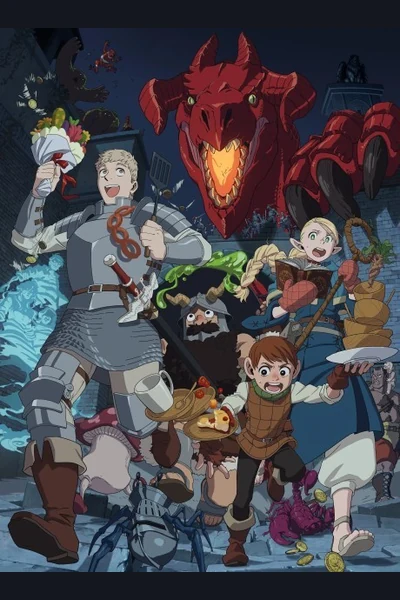
Laios's adventuring party has been defeated by a red dragon, which ate his sister Falin before anyone could lodge a formal complaint. Rescue requires an immediate return to the dungeon, but supplies cost money and time. Laios proposes eating the monsters. His companions react as though he has been waiting years for an administrative pretext, which is entirely correct.
Overview
Ryoko Kui's Delicious in Dungeon, also known as Dungeon Meshi, starts as a culinary joke with suspiciously well-developed ecology. Laios, elven mage Marcille and locksmith Chilchuck meet Senshi, a dwarf who has spent years learning how to butcher, clean and cook the dungeon's wildlife. Slimes become gelatine; walking mushrooms meet the pan; living armour presents a more advanced shellfish problem.
The meals are funny, but they also reveal character, culture and the circulation of energy through the dungeon. What eats what? Who maintains the ecosystem? Why can dead adventurers usually be resurrected here? Kui keeps following practical questions until the fantasy world becomes startlingly coherent.
Why it matters
Many fantasy stories mistake accumulated detail for world-building. Kui makes detail causal. Biology affects cuisine, cuisine affects relationships, and relationships alter the expedition. The result honours tabletop role-playing conventions while interrogating assumptions players normally step over on the way to the treasure chest.
It also treats appetite broadly. Hunger for food, knowledge, acceptance and control gradually intertwines, giving the completed story far more emotional and thematic reach than “what if we sautéed the basilisk?” initially promises.
What to expect
Expect affectionate party comedy, ingenious meals and an adventure that grows darker without discarding its warmth. There is death, resurrection, blood, body horror and discussion of eating creatures uncomfortably close to people. The cooking looks appetising often enough to raise questions best not explored at the supermarket fish counter.
Laios's intense fascination with monsters is both a running joke and a thoughtful portrait of someone whose interests connect him to the world while complicating human conversation. The ensemble's exasperation never cancels its care.
Adaptations and versions
The manga is complete and delivers Kui's story at its intended pace. Studio Trigger's anime is unusually attentive to its visual comedy, creature movement and food preparation, while adding performances and sound design that make every simmer and crunch alarmingly persuasive.
The English title and Dungeon Meshi refer to the same work; they are not separate recipes. Companion publications and short extras add flavour but are not required for the main meal.
Where to start
Either principal version is an excellent entrance. Start with the anime for Trigger's motion and comic timing, or manga volume one for Kui's clean pagecraft and the certainty of a finished journey.
Verdict The SFcrowsnest take
Delicious in Dungeon is what happens when a creator takes the question everybody else used as a throwaway gag and answers it with scholarship, compassion and butter. It is funny, rigorous fantasy whose world-building can be tasted. Eat before watching; your cupboards are not stocked for the alternatives.