
Banana Fish
A charismatic New York gang leader and a gentle Japanese visitor are pulled into a conspiracy around a mind-destroying drug; a searing, tragic crime saga far ahead of its 1985 origins.
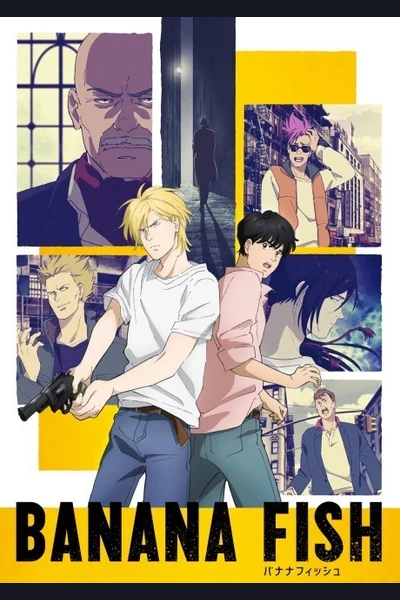
Seventeen-year-old Ash Lynx leads a New York street gang while trying to escape crime lord Dino Golzine, who groomed and abused him. The phrase “Banana Fish”, muttered by Ash's traumatised veteran brother and a dying man, points towards a conspiracy. Japanese photographer's assistant Eiji Okumura enters this world by accident and becomes the one person Ash cannot treat as another tactical calculation.
Overview
Akimi Yoshida's manga began in 1985 and combines gang thriller, political conspiracy and an intensely tender relationship between two young men. Ash is frighteningly intelligent and lethally competent because survival demanded both. Eiji offers no comparable violence; his strength is seeing Ash as a person rather than weapon, victim or possession.
Their attempt to uncover Banana Fish draws in gangs, organised crime, soldiers and government interests. Every institution that might rescue a child has discovered a reason not to.
Why it matters
Published in a girls' manga magazine, Banana Fish ignored narrow demographic expectations and delivered a hard American crime saga years ahead of many mainstream depictions of queer emotional intimacy. Ash and Eiji's bond exceeds labels without evading love.
The series also understands abuse as a structure of power. Ash's brilliance cannot erase trauma, and predators repeatedly exploit the world's willingness to see him as dangerous rather than endangered.
What to expect
This is exceptionally heavy material: child sexual abuse, rape, trafficking, drugs, torture, gun violence, suicide, racism and repeated trauma. Much is discussed or implied rather than graphically shown, but its emotional presence is relentless. Prospective viewers should take the warnings literally.
The thriller can become melodramatic and brutally convenient in arranging fresh suffering. Its American setting also carries stereotypes and period attitudes. What survives is Yoshida's fierce compassion for characters denied safety.
Adaptations and versions
The completed manga is set largely in the 1980s, with Cold War politics and the aftermath of Vietnam embedded in its conspiracy. MAPPA's 24-episode anime moves events to the 2010s, adding smartphones and updating surface details while retaining much of the original plot.
That modernisation makes the action immediate but creates occasional tension with foundations designed for an earlier America. Side stories, especially those concerning later reflection and earlier relationships, add important context to the manga world.
Where to start
The anime is a powerful, complete introduction with excellent performances and a clear route through the conspiracy. Read the manga for Yoshida's original period setting, fuller texture and companion stories. Neither route is emotionally light travel.
Verdict The SFcrowsnest take
Banana Fish is a crime tragedy whose real subject is whether one human connection can create freedom inside a life built by abuse. It is painful, sometimes punishing and never disposable. Ash and Eiji remain unforgettable because the story knows tenderness is not weakness; in their world, it is the bravest contraband available.