
The Apothecary Diaries (Kusuriya no Hitorigoto)
A sharp-witted apothecary girl solves poisonings and palace intrigue in an imperial rear court; a quiet sleeper that became one of the biggest anime of the decade.
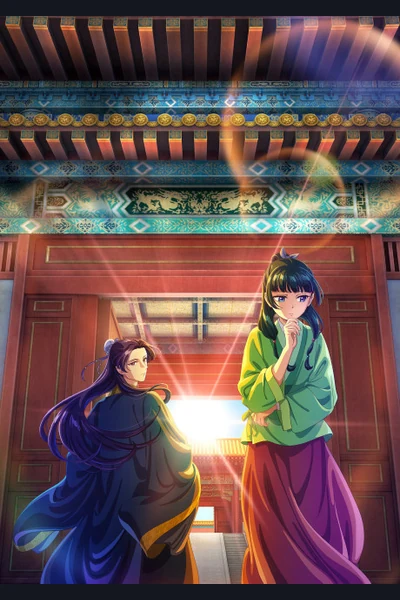
Maomao is kidnapped and sold into service in an imperial rear palace, where the sensible plan is to remain inconspicuous until her contract expires. Then the emperor's children become mysteriously ill. Maomao understands medicine, dislikes preventable death and has never met a poison she did not wish to examine personally. Inconspicuousness lasts about as long as one would expect.
Overview
Natsu Hyuga's The Apothecary Diaries began online before publication as light novels and adaptation into manga and anime. Its setting is a fictional empire strongly inspired by historical China. The rear palace houses the emperor's consorts, attendants and a compressed ecosystem of status, rumour and reproductive politics.
Maomao solves medical and social puzzles by observation, experiment and an unsentimental knowledge of how bodies work. Her talent attracts Jinshi, an official of such preposterous beauty that rooms lose several points of collective intelligence when he enters. He brings cases; she attempts to avoid promotion and gains responsibilities with the reliability of gravity.
Why it matters
The series offers a detective whose intelligence is inseparable from class and gender. Maomao notices what senior men overlook because she understands cosmetics, childbirth, domestic labour, prostitution, poison and the ways powerless people communicate indirectly.
Its cases also accumulate. A rash or misplaced object may seem trivial until court relationships give it weight. The pleasure lies not in a procession of unrelated clever answers but in watching small observations expose the architecture of a dangerous institution.
What to expect
Expect medical mysteries, dry comedy, slow court intrigue and romantic tension that Maomao treats much as she would an unidentified fungus. The pace rewards attention, although her brisk internal judgements prevent the palace from becoming a museum tour.
The material includes kidnapping, slavery, concubinage, sexual exploitation, infant illness and death, attempted poisoning and the precarious lives of women. These are handled with restraint rather than modern euphemism. The medicine is narratively researched but should not be mistaken for clinical instruction; please do not test mystery powders on the household.
Adaptations and versions
The light novels are the main source. Japan has two separate manga adaptations, which accounts for covers and credits that can appear to describe parallel Maomaos. Nekokurage illustrates the Square Enix version best known in English-language print markets.
The television anime brings colour, music and exceptionally expressive character acting to the mysteries while retaining the patient larger plot. It is an adaptation, not the source, and naturally sits behind the novels' detail.
Where to start
The anime is a polished and welcoming entrance. Begin with the light novels for Maomao's fullest reasoning, or the licensed manga if visual deduction and a measured reading pace suit you better.
Verdict The SFcrowsnest take
Maomao is one of the great modern genre investigators: curious without being cute about danger, compassionate without performing sainthood and gloriously unimpressed by decorative men. The Apothecary Diaries turns the palace into both laboratory and crime scene. Its strongest intoxicant is competence, administered in carefully increasing doses.